TCE 47: Did a Beatle Sell His Soul to Satan?
Theology and Current Events #47 considers "John Lennon's Pact with Satan," by Margaret C. Galitzin at "Tradition in Action." It's a book review of "The Lennon Prophecy" by Joseph Niezgoda. I preface this blog reading on this podcast on how one may extricate oneself from any such pacts already made. -Website: https://www.traditioninaction.org/bkreviews/A_026br_LennonProphecy.htm -Prayer for binding yourself only to God in the confessional before absolution: "In the name of Jesus, I renounce any and all pacts or bonds with Satan or any demons or any damned souls that I have made in my life consciously or unconsciously and I bind myself entirely and exclusively to the Blessed Trinity, Father and Son and Holy Spirit as well as all the good angels and the saints that serve and adore the Trinity, especially the Blessed Virgin Mary and St. Joseph." https://rumble.com/embed/v1d29lz/?pub=e5jg1
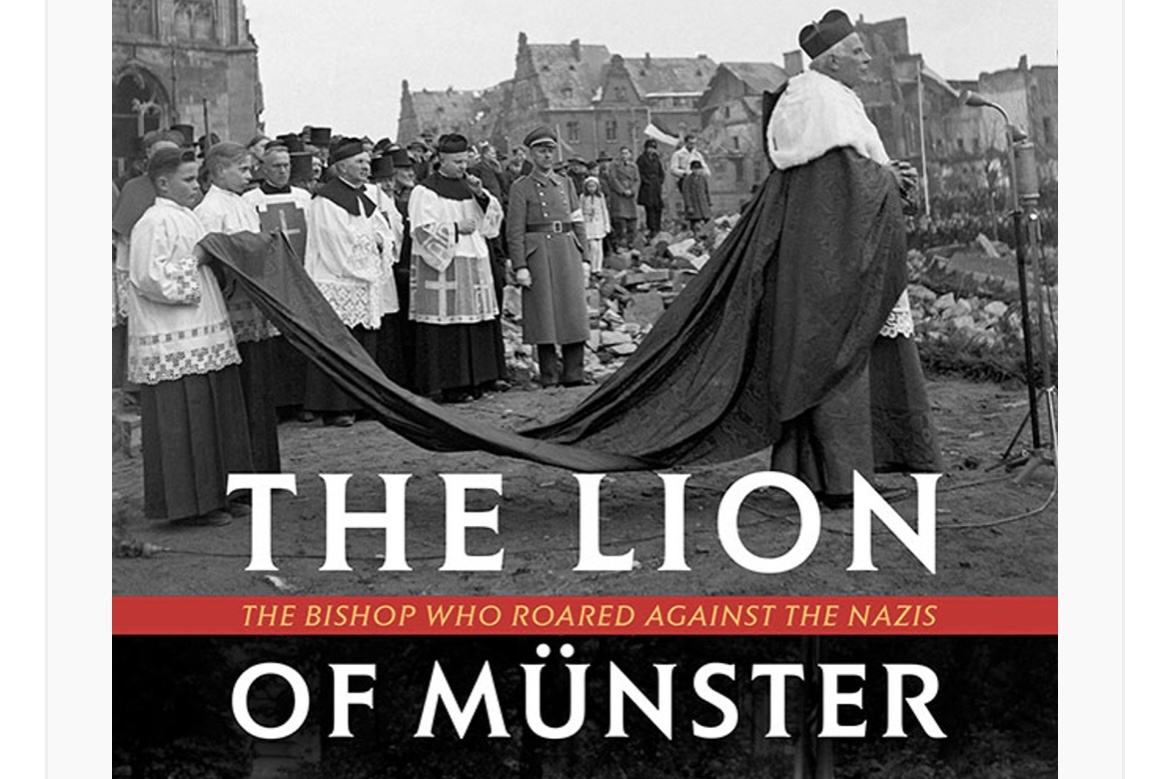
Cardinal Von Galen: The Lion of Münster
The book above is written by Fr. Daniel Utrecht of the Oratory. It is the book I'm reading on retreat. It's about Cdl. Von Galen of Munster, Germany who publicly resisted the Gestapo as early as 1941. Bishop Von Galen was a saint of charity and courage who took on the Nazis from the pulpit and even in the streets. But he wasn't alone: During the 1930s in Germany, he saw lay Catholics and priests who resisted the Nazis go to prison repeatedly for "currency speculation." Ever notice that godless regimes persecute good people on red-herrings like "currency speculation"? It completely reminds me of President Trump being raided by the FBI today on more red-herrings. And speaking of "currency speculation" being a charge against anti-Nazis, why do you think Biden's IRS just hired this week 87,000 new recruits? It's to [...]
Testimony from a New Catholic
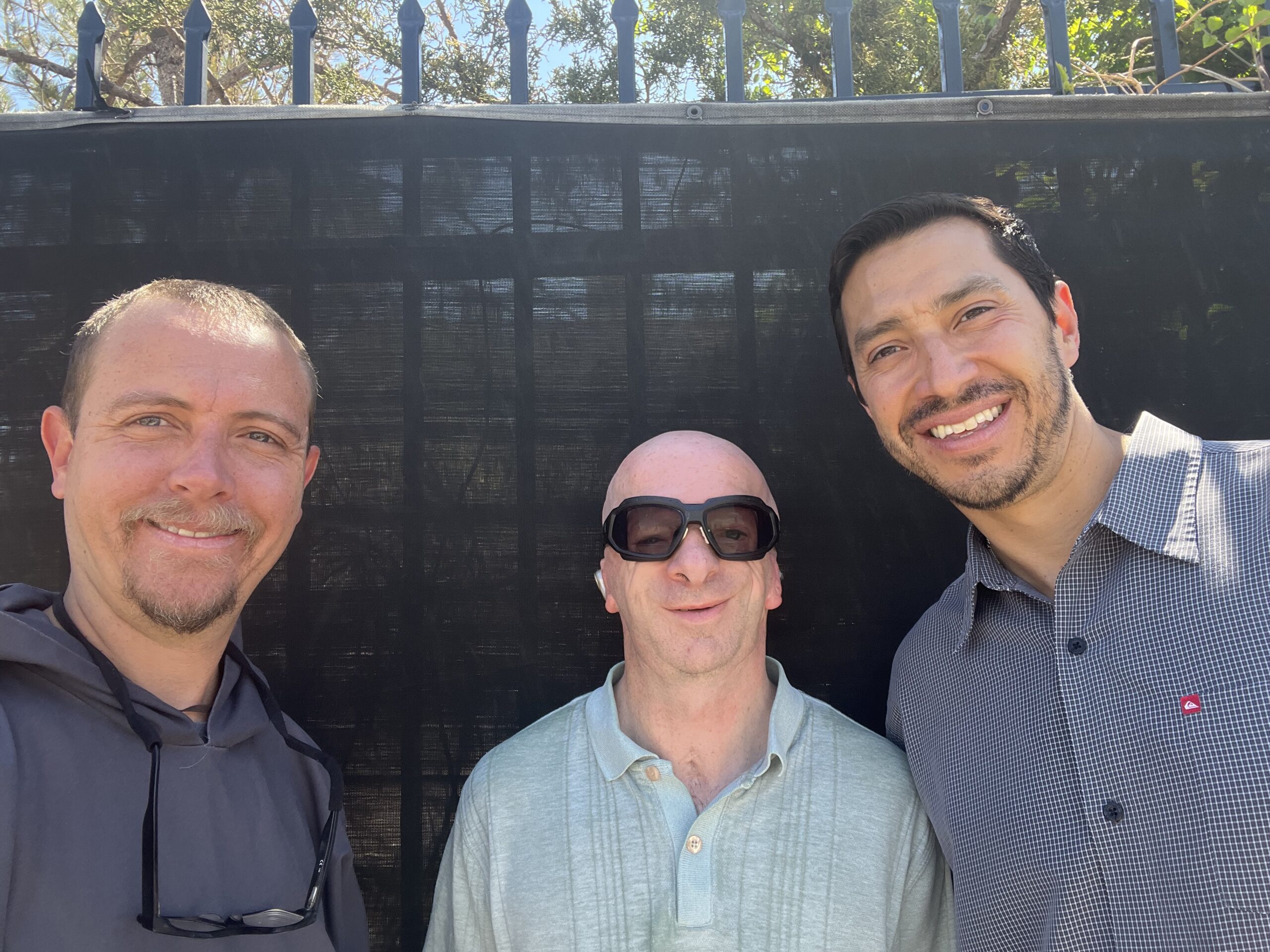
Guest Author: Dr. Francis Joel Smith Featured image above: Fr. David Nix, Dr. Francis Joel Smith, Mr. Michael Alarcon (pausing from prayer outside Denver's Planned Parenthood.) Early life, including birth defects and challenges with other kids growing up I was born with Treacher Collins syndrome. That means, due to a genetic mutation, I was born without the bones that make up the ears, cheekbones, and eye sockets, as well as severe deformities of both jaws and a gaping cleft palate. Without ears, I have never been able to hear without special bone-conduction hearing aids. My jaw deformities have always made it difficult to breathe, speak, bite, chew, and swallow food. My speech has also been severely impaired by my jaw deformities and cleft palate, although intensive speech therapy in my childhood and youth has made a tremendous difference so now [...]

VLX 117: Is It Lawful to Divorce?
Mt 19:1-9 *** Summary: Christ asserted to the Apostles who would spread Catholic marriage and also to the Pharisees looking for loopholes on re-marriage, that in certain circumstances a married person could carefully discern departure from one's spouse when the other was provably guilty of unfaithfulness, and the early Church added physical and psychological safety or salvation to this, then, you may discern departure from your spouse, but you still can't re-marry. https://rumble.com/embed/v1c0jpx/?pub=e5jg1
Be Rarely Angry but Never Arrogant About the Church Crisis
In full transparency, I do not categorize traditionalists as "joyless" any more. The truth is that I find more joy in traditional communities than I do the normy Catholic world. In fact, I currently find some of the highest levels of joy, happiness and fraternal charity in traditional communities than nearly any other community to which I am frequently exposed in the United States. I would consider evangelical Christians way up there, too, actually. But "joy" doesn't matter too much, especially as we consider the Scriptures and the official ascetical theology of the Catholic Church. Both teach that "gifts of the Holy Spirit" are given by God and they are listed in Isaiah 11 as the spirit of wisdom, and of understanding, the spirit of counsel, and of fortitude, the spirit of knowledge, and of godliness. This is the fire [...]
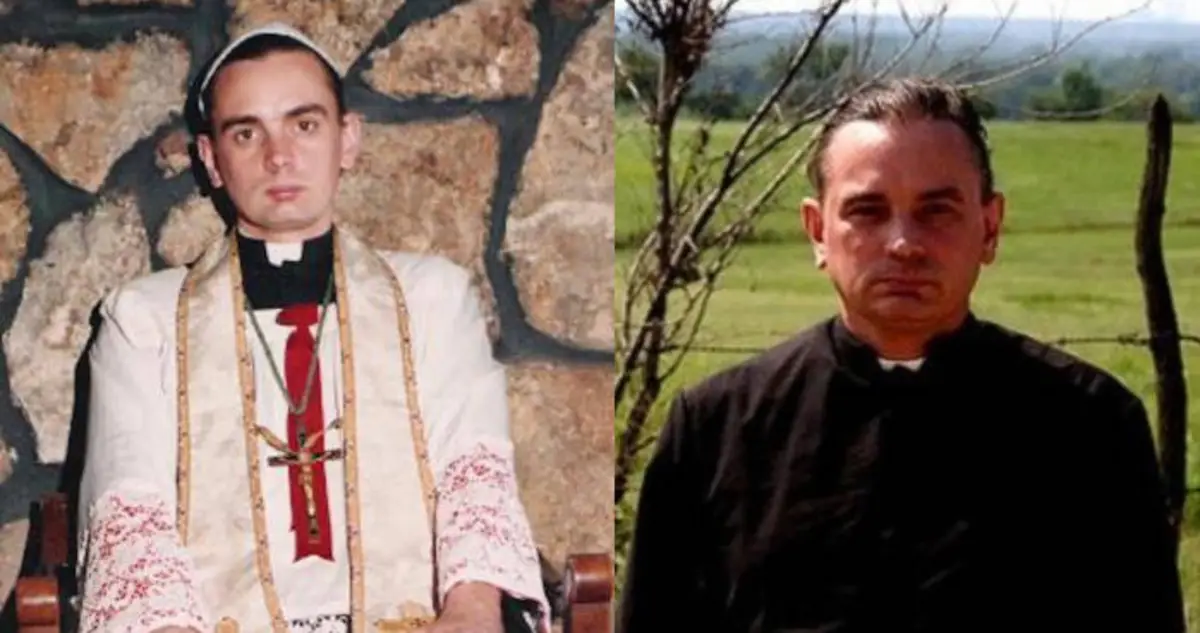
RIP David Bawden (aka Pope Michael)
David Bawden (who went by "Pope Michael" in Kansas) has apparently died. God rest his soul. I thank God he apparently made a confession at the end, but it's not that big of a statement since I hope every person on this planet confesses before dying. People on social media are saying ridiculous things like he repented of "his apostasy" at the end just since he thought he was the Pope for the past decade or so. Let's get a few things straight: 1-Bawden did not accept the post-Vatican II Popes as valid. I do. At worst, this would make him "a schismatic," not "an apostate." In fact, I don't think he was ever a schismatic since the Church traditionally gave wide girth to someone doubting a Pope: “Neither is someone a schismatic for denying his subjection to the Pontiff [...]
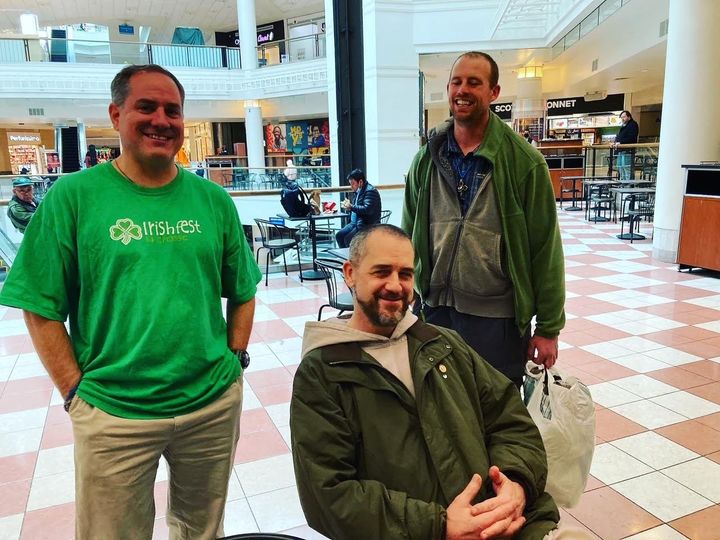
Three Red Rose Rescuers Get 90 Days in Jail
Red Rose Rescue (with whom I've been arrested twice for peaceful counseling inside an abortion center) has some important news. Usually our jail time is only a short time. But my friends Fr. Fidelis, Will and Matt (see above) just got 90 days in jail in New York for a rescue this summer. Fr. Fidelis and I discussed this on the phone for awhile just a few weeks ago. Now he's in jail for three months. Red Rose Rescue reports: Father Fidelis, Will Goodman, and Matthew Connolly have all been sentenced to 90 days in jail. They were given a $200 surcharge, a $500 fine, and a $50 DNA charge...Quotes were hastily written down since electronics were not allowed to be in use during the sentencing. All quotes are the gist of what was said, most of them are close [...]
RCT 3: Faith: The Building Block
Today’s pod considers the first few pages of the Roman Catechism of Trent (RCT) on supernatural faith. TAN books pagination p. 11-12. https://rumble.com/embed/v1b5xzf/?pub=e5jg1
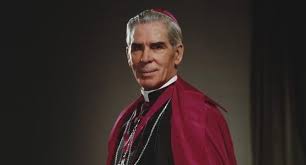
Archbishop Fulton Sheen’s Description of the Final Antichrist
Archbishop Fulton Sheen describes the final Antichrist thus: Because his religion will be brotherhood of Man without the fatherhood of God, he will deceive even the elect. He will set up a counter church which will be the ape of the Church, because he, the Devil, is the ape of God. It will have all the notes and characteristics of the Church, but in reverse and emptied of its divine content. It will be a mystical body of the Antichrist that will in all externals resemble the mystical body of Christ.—AB. Sheen's talk in 1947, fully linked below: https://www.youtube.com/watch?v=s3e6mTMlM-s

We Will Worship God Alone
Last week Cardinals worshipped the pagan gods with a turkey bone under the title of "western grandmother" in Canada. Cardinal Manning wrote in 1861, conglomerating numerous saints and Fathers: "Rome shall apostatise from the faith, drive away the Vicar of Christ and return to its ancient paganism... Then the Church shall be scattered, driven into the wilderness, and shall be for a time, as it was in the beginning, invisible hidden in catacombs, in dens, in mountains, in lurking places." The prophesy to "drive away the Vicar of Christ" may have a few meanings, found here and here and here (all non-traditional links.) The Cdl Manning quote above also reminds me of the Holy Maccabees of the Old Testament (the feast in the 1962 calendar today) who even saw some Jewish priests of their day bow down to the Greek [...]