St. Joseph versus Child-Sex-Trafficking
When it comes to triumph over unjust suffering, there are few saints more inspiring than the Apostle Paul: "I rejoice in my sufferings for your sake, and in my flesh I am filling up what is lacking in Christ’s afflictions for the sake of his body, that is, the Church.” (Col 1:24) But in the Old Testament, the gold medal of joy amidst suffering must go to Joseph of Egypt. When we consider that Joseph was betrayed by his family and sold into slavery, we begin to meditate on the plight of the millions of children sold into slavery today. When Potiphar’s wife unsuccessfully tries to seduce him, she falsely accuses him to be the aggressor and lands him in prison. "And Joseph's master took him and put him into the prison, the place where the king's prisoners were confined, and [...]
8th Sunday after Pentecost
How important is charity for the traditional Catholic? (Sorry I spoke too close to the mike. I'll avoid this next time.)
Padre Fortea
https://youtu.be/9pehy_fNNNs
7th Sunday after Pentecost: How to be saved
This podcast is about what you must do to be saved.
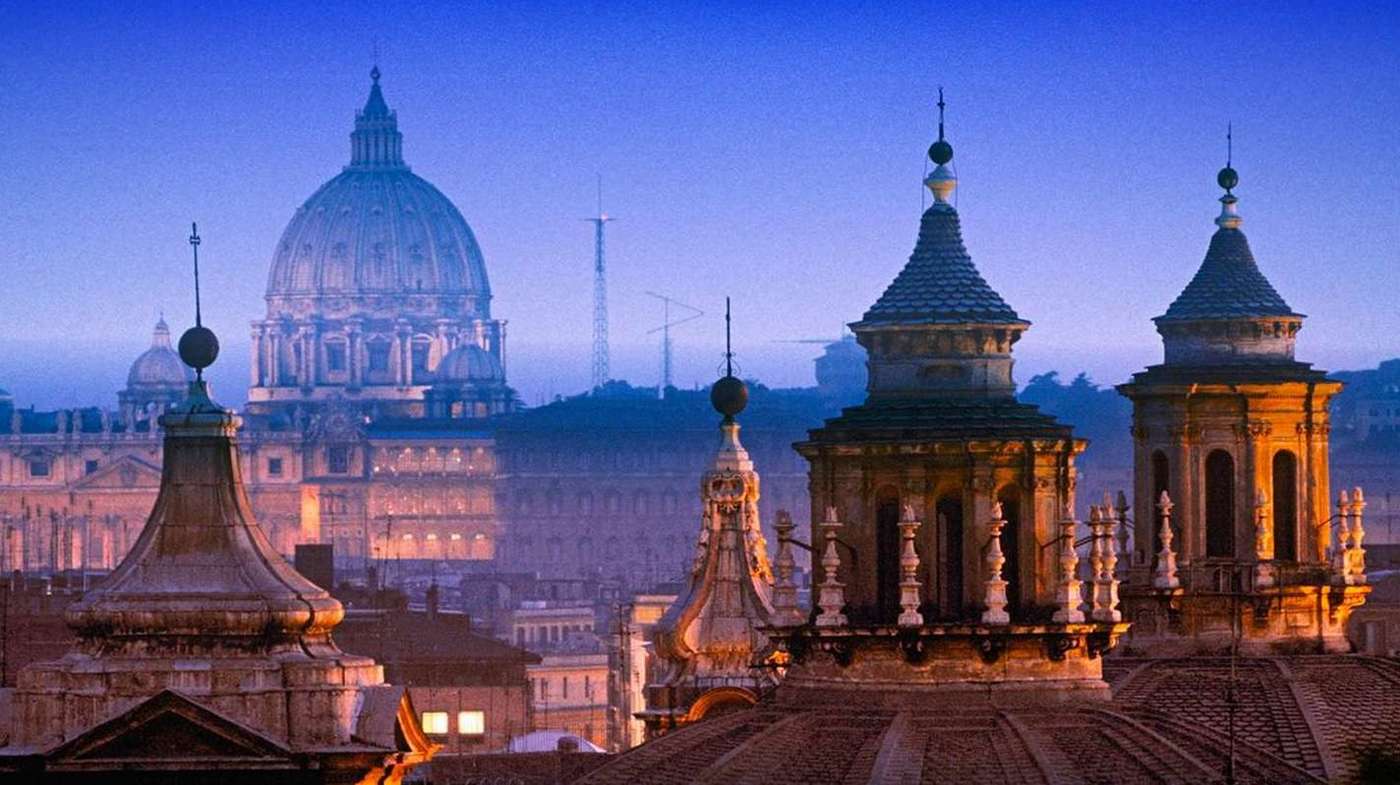
On Eternal Rome
This is an edited re-post of a little-known blog I wrote when I was last in Rome. I originally called it "Peter and Paul" but two other titles that fit are: "Why Eternal Rome will Triumph over Temporary Rome" or "Why the hierarchical Church was no different from the charismatic Church." Most of us Americans picture the early Christians of Rome being physically underground but spiritually free. Then, everything changed in 313 when Constantine’s edict of Milan reversed the course of history, allowing Christians to be physically “above-ground” but spiritually oppressed by the Emperor and Pope who inadvertently became strange bedfellows. The idea of the pre-edict-of-Milan Christians being “more free” is attractive to the American Protestant way of thinking precisely because of the separation of Church and State and preference to reject authority making demands upon one’s own personal way of [...]
Catholic “Vulnerability”
I had abdominal surgery two weeks ago, so I got sent home with some narcotics. I wasn’t in much physical pain, but I noticed there was a lot of psychological relief in taking the narcotics. I was anxious for an upcoming meeting, so I found myself taking hydrocodone for the calming effects more than for the physical recovery. Any reader who had been in medicine for even a short time should be able to see the alarms of pre-addiction in the previous three sentences. Happily, I caught this too and never finished my prescription. (And the meeting went very well, too. Of course, this had nothing to do with the narcotics.) But, it’s not a guarantee that I would have caught the pre-addiction. And even if I did catch it, who is to say I would have wanted to? Narcotics [...]
Is Your Marriage Valid?
I know this isn't the most romantic question on father's day, but as a spiritual father to biological fathers, I think you'll find this very encouraging by the end of the article. First, we must understand that it is God who forms the bond of a sacramental marriage when two people in freedom say "I do" and consummate the sacrament that night. Secondly, what is often called “an annulment” among Catholics is actually better described as a “declaration of nullity.” When a forlorn couple asks their diocese to investigate if they were ever married, the diocese may find real problems and declare it “null.” These problems have to be pre-existent (before the wedding) because a declaration of nullity is basically when the diocese says to the couple: “In our best guess, you never had the ability at the altar on [...]
Polish and American Catholicism
NB I was asked why I took down my last post. The reason I removed it is because I believe my impact on that topic will be greater at a more strategic time. I'm under no prohibitions to blog. After all this, I still have no fear to proclaim the truth...but I sense in prayer that my soapbox must wait in order to affect more people after my medical leave is finished (even if my only remaining podium be the internet.) Like my first great Jesuit spiritual director (Fr. Ralph Drendel SJ) my second great Jesuit has gone to his eternal reward. Late Thursday night Fr. Raymond Gawronski SJ, went before the face of the Triune God. May you rest in peace, Ray, and may perpetual light shine upon your soul. I hope you enjoy this short writing below as much [...]
Christmas Homily 2015
This is the 7-minute version of the homily I gave for Christmas, today at the home of a family outside of DC (see above picture for the outside of their home on this tropical 70 degree Christmas outside the Capital.) It was originally slated for my very first Missa Solemnis at midnight south of here.
Immaculate Conception Homily
A lot is covered in this homily, but it all has to do with Jesus and Mary and you.