Who Did the Saints Listen to in a Church Crisis?
This podcast is about the difference Divine Law, Ecclesial Law and Particular Law. This is the necessary interlude for forthcoming heresy podcasts from the fourth century onward.
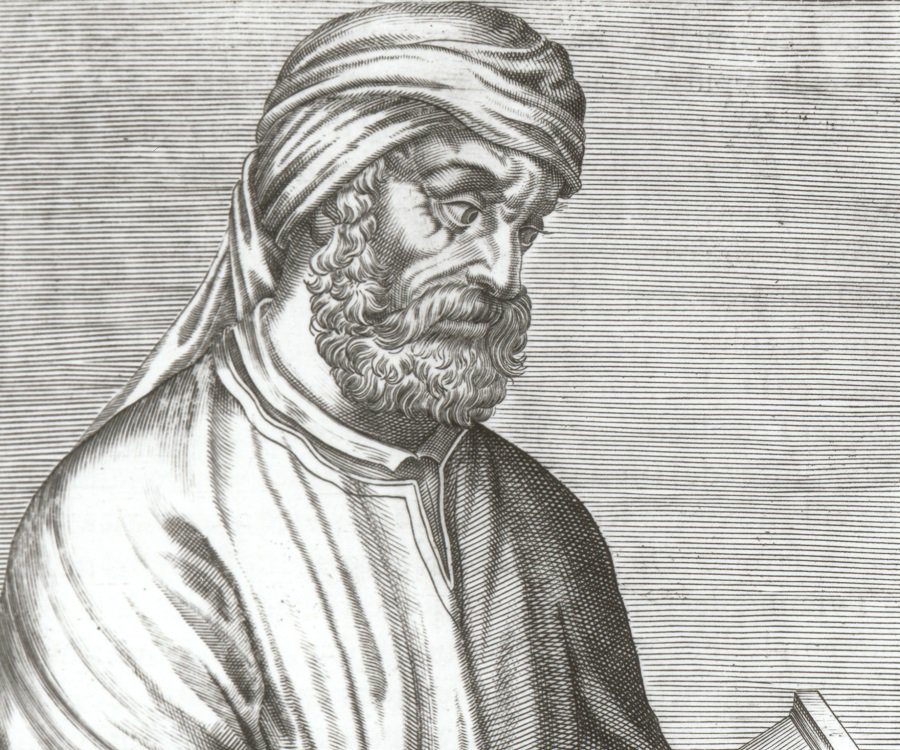
This podclass tackles the heresies of the third century including Sabellius (founder of Modalism), Paul of Samosata (forerunner of the Adoptionist heresy), Manes (founder of Manichaeism that temporarily ensnared St. Augustine early on in his conversion) and finally we consider two semi-heretics, Tertullian and Origin. On the blog that has photos, you can see Tertullian above. Below is Man-E-Faces, a good symbol of the Sabellian or Modalist heresy. The third century heresies as outline by St. Alphonsus Liguori in the 18th century can be found on this link.
In this “podclass” we’re going to see why Marcionism is the most prolific heresy today. Marcion was a second century heretic who taught that the God of the Old Testament was a different God from the New Testament. The section of St. Alphonsus Liguori's book can be found here. Scroll down to #8 to read about Marcion. Correction. I should have said the following: "St. Cyril of Alexandria taught that St. Paul wrote the New Testament book of Hebrews in Hebrew and St. Luke translated it to the Greek."
This is the first in a new series called "Heresies and their Remedies." We start with the heresies that popped up in the first century and were tackled by St. John the Beloved. These series will probably be released every other Tuesday. One reference for this class will be a book by St. Alphonsus Liguori called History of Heresies and Their Refutation. NB The music bumpers for this podclass will be a funny fail at the "2001 Space Odyssey" because I thought it was appropriate for how heresy always starts glorious, but proves ugly.
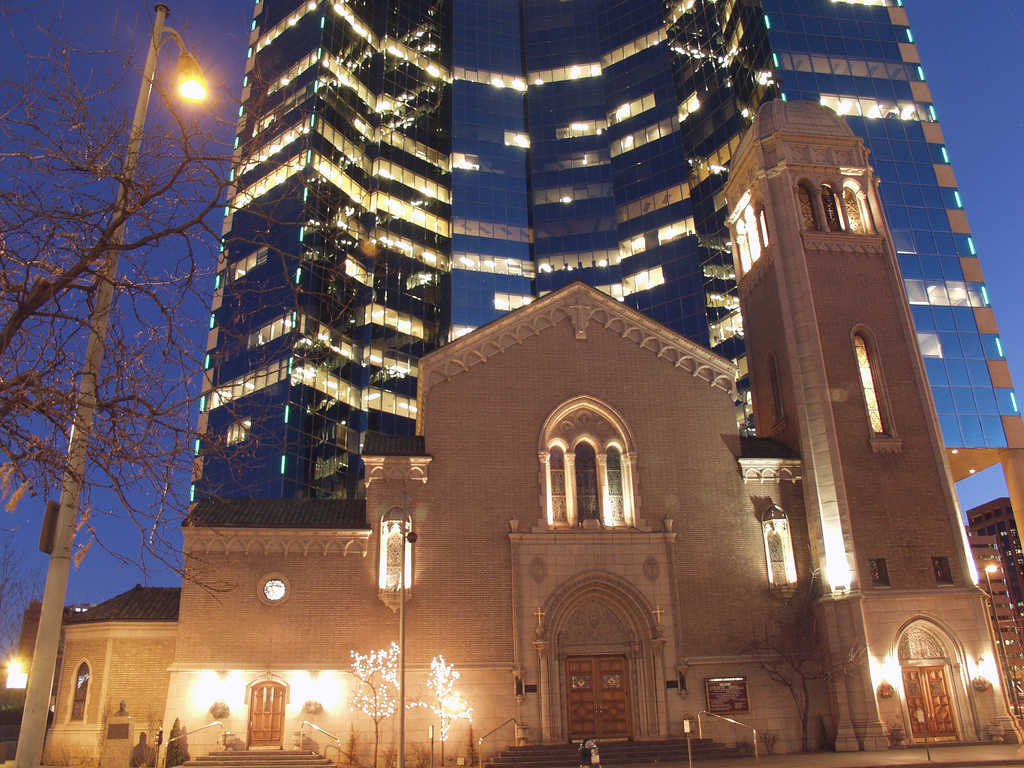
This sermon is about how to get your kids to heaven in 15 minutes a day. The featured image is Holy Ghost parish in downtown Denver. Some families of this parish used the Baltimore Catechism in the 1980s, and it paid off.
This sermon is about the beauty of marriage by way of the pain of annulments, and it is sure to be controversial. It might sound excessively traditional, but it is based on a key line that I forgot to quote from Pope John Paul II. He said that for a declaration of nullity to be granted, run-of-the-mill difficulties in marriage were not sufficient, but rather, "real incapacity is to be considered [for an annulment analysis] only when an anomaly of a serious nature is present"—Pope John Paul II's exhortation on Canon 1095, written on 25 February 1987. One example of "an anomaly of a serious nature" would be the couple's [...]
Are you saved from eternal death by your conscience or by Jesus Christ? The primacy of conscience is the New Jansenism.
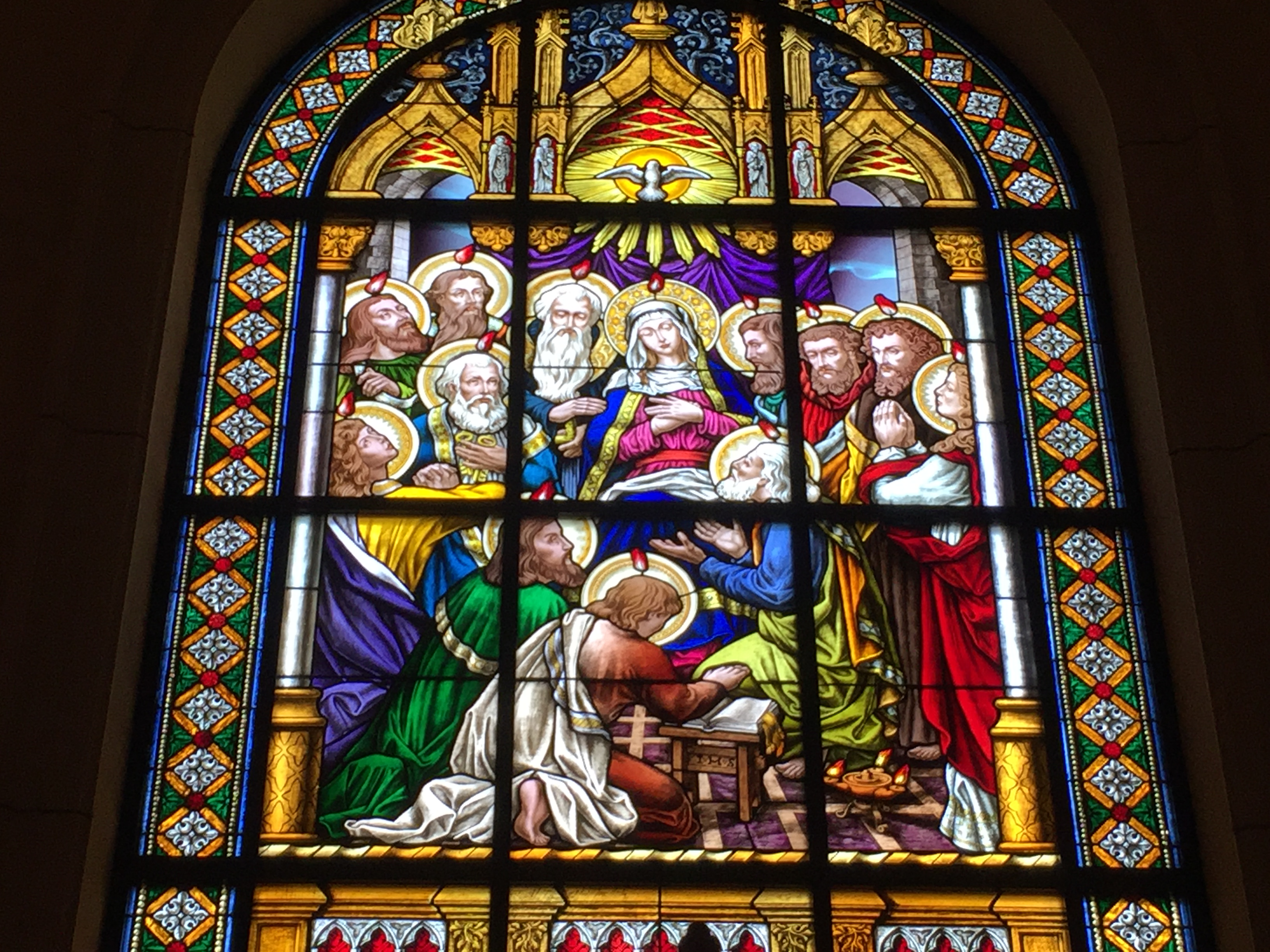
Covered in this podcast is a wide range of Catholic issues, from the first Pentecost to the charismatic movement today, to St. Maximilian Kolbe. We’ll especially consider Mary’s role against demons and the syllabus of errors in modern times. Special thanks again to the Benedictine Nuns of Mary Queen of Apostles for allowing me to use their music as the bumpers to my iTunes sermons and podcasts.
The old list has six precepts. The new list has five precepts.
aka Good Shepherd Sunday This sermon recognizes the wolves that have caused the current crisis in the Catholic Church. In this sermon, I also describe the shepherds that God may be currently raising in order to shepherd the Church, as Christ and the early Apostles led and guarded the Church. This Sunday is appropriately called “Good Shepherd Sunday,” due to the Gospel from St. John chapter 10. Today is the eclipsed feast day of St. Catherine of Siena in the old calendar. In line with today's sermon, it is worth noting the seven things that God the Father told St. Catherine of Siena would restore the Catholic Church in times of [...]