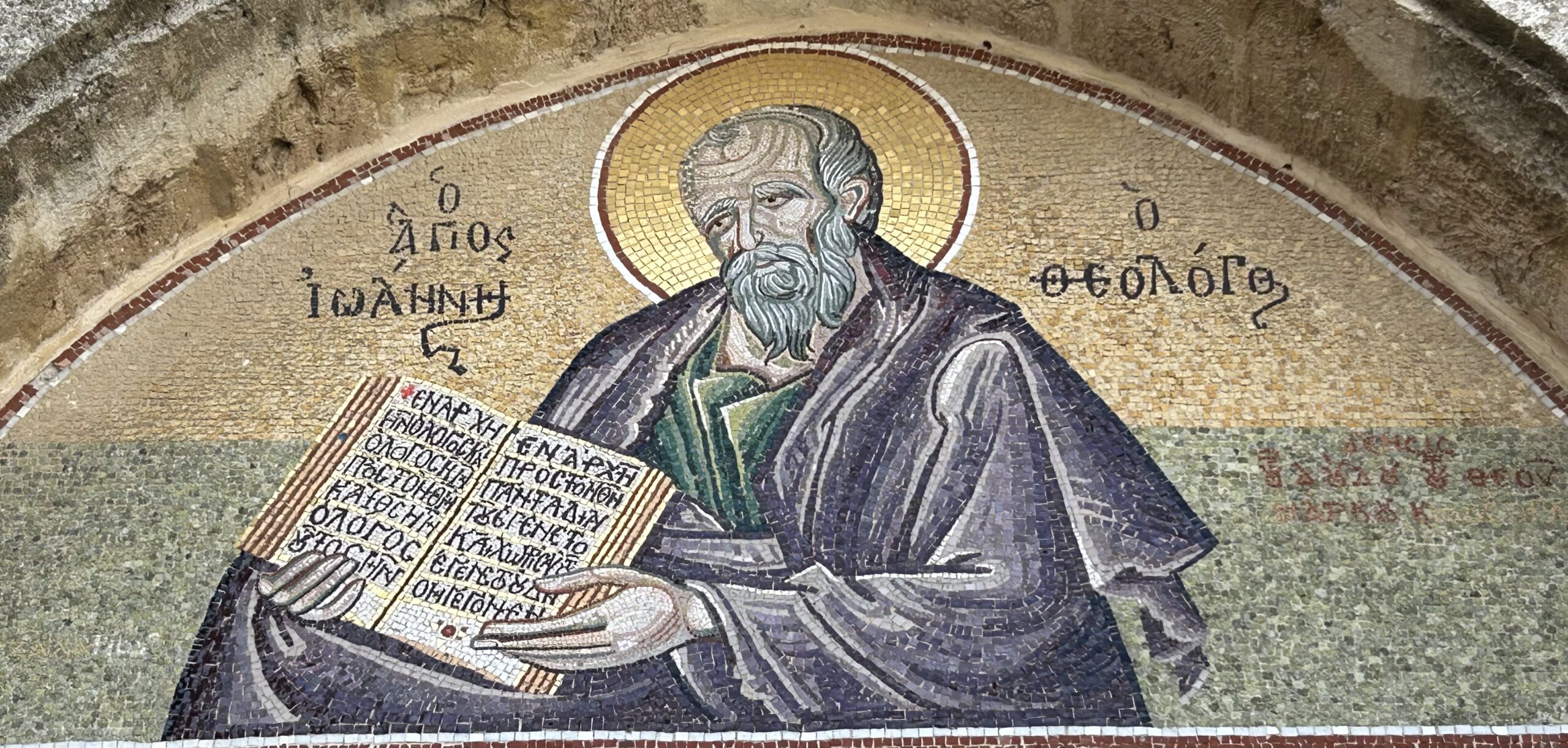
Or how I became a “Catholic Fundamentalist.”
In 2024, I gave a talk at a women’s conference at a traditional Catholic parish called My Two Conversions. I explained how in high school, I was a pretty liberal Catholic who worked at The Catholic Worker Soup Kitchen in the afternoons. Perhaps in the evening, I might be found at a downtown Denver coffee-shop writing letters against the death penalty for Amnesty International.
But, at 16 years old, I had a big conversion and I came to believe that Christ was truly present in the Blessed Sacrament. Then, another 16 years later (several years after ordination, in fact) I became a traditional Catholic. It’s mostly in the above-linked talk.
In between those two conversions, I went to a mainstream Catholic seminary that styled-itself to be one of the most conservative ones in the nation. At that time, I learned French and Spanish and Portuguese in my free time in order to be able to preach the Gospel wherever God might send me as a priest one day. Pope Benedict XVI was the Pope, and I was very happy doing a conservative Novus Ordo Mass for the rest of my life. Life was good. Or so I thought.
As seminary studies were ramping up, I found the Scripture department to be very confusing. Four of the top professors at my seminary had the highest degrees of Scripture Scholarship from Rome. They were very divided even as modernists: Two of them believed in a mild version of the inerrancy of Scripture, whereas two of them did not. Regarding the latter two, one of them believed in a historical-critical method to the Bible but the other believed in a literary-critical method approach.
The literary-critical method approach to the Bible is even worse, for the reader of the Bible ignores not only the Church Fathers, but even Biblical history—both ancient and modern. The literary critical method essentially means you (the reader) get to decide what is true in the Bible, based on what you personally think is believable or even simply accepting whatever doesn’t challenge your own personal moral failings.
Today, most traditionalists do not know that the highest form of written Divine Revelation is the Sacred Scriptures. Thus, the Catholic theologian’s approach to the Bible is going to affect every form of theology that he later studies: Dogmatics, soteriology, moral theology and even sacramental theology and liturgical theology. That is why even though you’re probably bored at this article by this point (compared to my recent spicy topics) this one may be one of the most important ones I have ever written. This is because everything hinges on the Bible, even in the Catholic Church.
Most traditionalists today also do not know that the first people excommunicated by Pope St. Pius X for the heresy of modernism were Scriptural heretics. Yes, it’s very easy for the new traditional Catholic who starts reading about Pope St. Pius X’s opposition to modernism to think that the holy pope was already standing up against contraception or clown-masses. Nope. Those weren’t even on his radar yet. The holy pope knew in excommunicating Alfred Loisy that the beginning of all heresies associated with the coming tidal-wave of modernism would start with doubting the Bible. Not the Mass. The Bible.
You see, it’s not a Protestant notion to say the Bible is truly the Word of God. The Church Fathers believed the Old Testament and New Testament was the actual and literal Word of God a full 15 centuries before Protestants started saying similar phrases (all the while slicing-and-dicing distasteful Catholic books out of their own Protestant Bibles.)
In both the case of the Protestants and the case of the modernists, Satan’s first trick in getting humans to turn on the Word of God would have to be for Christians to doubt the literal interpretation of the Bible. Yes, it was truly the devil’s first trick to get us to doubt the Word of God: Now the serpent was more crafty than any of the wild animals the Lord God had made. He said to the woman, “Did God really say, ‘You must not eat from any tree in the garden’?”—Genesis 3:1. If God can’t be trusted, well, He can’t be trusted.
Pope Leo XIII wrote these words in his 1893 encyclical titled Providentissimus Deus which may sound more evangelical than Catholic to a few readers: For all the books which the Church receives as sacred and canonical, are written wholly and entirely, with all their parts, at the dictation of the Holy Ghost; and so far is it from being possible that any error can co-exist with inspiration, that inspiration not only is essentially incompatible with error, but excludes and rejects it as absolutely and necessarily as it is impossible that God Himself, the supreme Truth, can utter that which is not true.—Providentissimus Deus #20.
As a liberal Catholic in high school, I was proud of being a mild believer, but I rejected the hard-core approach to dogma. Thus, I would smugly say things like “It’s not like God dictated the Bible word-for-word to the authors.” (God forgive me for saying such things.) But notice we just learned in the quote above that Pope Leo XIII said exactly the opposite, namely, that all the books of the Bible “are written wholly and entirely… at the dictation of the Holy Ghost.”
Of course, the Holy Spirit still wrote through human authors with the evangelists’ various tastes, syntaxes and styles. So, not unlike the Incarnation, we accept both the Divine aspect of the authorship and the human authorship. (The obvious difference is that the evangelists were sinners, where of course Christ had no sin in His Divinity or His Sacred Humanity.) In other words, St. John wrote in a different style than St. Paul, but we can still say that the Holy Spirit wrote through them both.
Part 2 of this series, Did God Really Say? is going to look at numerous quotes from Providentissimus Deus to see what the Church objectively teaches about the writing of the Bible, the interpretation of the Bible and why the Bible—even to the shock of most traditionalists today—is our highest form of written Divine Revelation and the public deposit of the faith. Part 2 will be very objective, with quotes from that encyclical and my evaluation of those quotes.
But here in Part 1, I want to tell my own subjective conversion on the Bible. I left this out of My Two Conversions talk (linked above) but my view towards the Bible as a neo-con non-trad becoming traditional also became the number one reason I would later offer exclusively the Traditional Latin Mass. Or, put another way, my acceptance of the inerrancy of Scripture in my early 20s is the only reason I am currently an Apostolic Catholic priest now in my 40s doing the old seven sacraments.
Here’s what happened: When I was working as a FOCUS missionary in Alabama in 2002, my brother and sister were in Universities in New Orleans (Loyola and Tulane, respectively.) Sometimes I would drive my little Mazda along the Gulf Coast to see them. Even back then, I would use my long trips driving to do audio books. My Mazda had a cassette player and someone gave me a cassette series on the Inerrancy of Scripture by Dr. Scott Hahn. I wish I remember the name of the series, but I don’t.
Before that drive across the Gulf Coast, I had already believed miracles of the New Testament were true. Clearly, I knew Christ’s resurrection was physical (not simply “risen in the hearts of the disciples” as many heretics had taught in the 1980s.) But even as a FOCUS missionary, I wasn’t so sure about the miracles of the Old Testament. Well, that tape set changed everything for me. By the time I ended it, I firmly believed in all the miracles of the New Testament and the Old Testament.
Although we Catholics do believe in a literal, moral, analogical and anagogical interpretation of the Bible, I learned from Hahn in that tape set that the literal view of the Sacred Scriptures must be the baseline of all other interpretations. For example, although we might be able to do advanced analogical typology between Jonah in the belly of the whale and the Resurrection of Jesus Christ, we are required as Catholics to believe not only in the physical resurrection of Christ, but also that Jonah was literally in the belly of the whale! (This tape set also helped me fully reject both Darwinian and even theistic evolution later as a priest.)
In that tape set I learned that Hahn’s Calvinist mentor (before Hahn became Catholic) had tens of thousands of Scriptural books in his library. He could read the Bible in Greek and he could even read papal encyclicals in Latin. Although Hahn’s mentor cried when Hahn became Catholic (and although he unfortunately died without ever becoming Catholic himself) he admitted that the Catholic Church had a higher view of the inerrancy of Scripture than any denomination he had ever studied! (Dr. Hahn, forgive me if I got some details wrong in there. I haven’t heard the talk in a long time.)
Now fast forward just a few years to me in seminary. When I started learning the literary critical approach to the Bible from seminary professors, I would start to mentally fall back to what I had learned about the inerrancy of Scripture from Hahn and his explanation of Providentissimus Deus. When Patristics teachers started to confuse me on Christ’s Divinity in my day classes, I always knew I could return to the Bible at night to know I would never doubt that the Divine Logos became flesh. (I would thankfully later learn the Church Fathers all interpreted the Bible in nearly the exact same way as St. Thomas Aquinas did.)
Or, when moral theologians tempted me to doubt the teaching on sins explained in Genesis, I could always go back to the Providentissimus Deus tape set in my mind, knowing those erudite bioethicists were simply tempting me as Satan tempted our first parents: Did God really say? And when liturgists tempted me to believe the Mass simply had to be “valid” instead of perfect, I immediately went back to the book of Exodus in the Bible to see the extreme detail with which God requires worship of Him.
I believe that the only reason I am a traditional priest today is because I knew God’s Word in the Bible could be trusted when everyone else confused me. I even believe the main reason I offer exclusively the Traditional Latin Mass and the other six sacraments in their ancient form is because—even within the darkest days in the subjective storms of confusion surrounding modernism—I could always return to the objective lighthouse of the inerrancy of Scripture.
Or, another example: The only reason I had the clarity to write Fifteen Mortal Sins Most Catholics Are Missing (now read by millions of people) is because I knew the Bible and the Fathers trumped all the bad teachers in my life who claimed to be Catholic.
None of this is bragging (I hope.) It’s about how I narrowly escaped becoming a modernist heretic. A friend of mine used to say that the Hahns radicalized him on moral issues long before he became a traditionalist. Well, the same is true for me, but it started with Biblical theology. The tape set on Providentissimus Deus galvanized forever in my mind that public Revelation can never change.
I should add here that although I have met Scott Hahn, he doesn’t really know me. So, don’t blame my extremism on him if you don’t like me.
In any case, after so many mistakes in my life, I had realized I had taken Satan’s bait: Did God Really Say? And even though I would later add many volumes of the Church Fathers and St. Thomas’s Summa to my mental rolodex, I soon found that all saints redound their most important theological conclusions to the Bible itself. Yes, God had really had said those things. The Sacred Scriptures are the summit to the Magisteirum, even according to papal encyclicals.
That’s not to say the Bible is our only source of Revelation. Obviously, we know the Holy Spirit wrote through the Apostle Paul: So then, brothers, stand firm and hold to the traditions that you were taught by us, either by our spoken word or by our letter.—2 Thess 2:15. Thus, the other source of Revelation besides the Bible is Tradition (see “spoken word” above.) But this is why I use the modifier “written” as I repeatedly say the highest written form of Divine Revelation is the Bible.
In fact, you can see two recent articles I wrote on rejecting Sola Scriptura both here and here.
Scripture and Tradition are tied together, not only in the Deposit of the Faith, but also in the story of my own conversion. As I turned my back on Satan making me doubt the Bible, it also automatically made me turn my back on anyone doubting tradition. Yes, I knew I could start believing with all my heart that if God’s Word truly can be trusted (especially as explained in the papal encyclicals and Church Fathers) then I could also accept 19 centuries of Magisterial teaching and the seven old-school sacraments remaining unchanged above and against everything else I would encounter as a priest.
Next time we will look at direct quotes from Pope Leo’s Providentissimus Deus. I will evaluate several quotes to then disprove the poison of modernism that we all (including me as you can see in my story above) imbibed with such detriment to our souls. It all starts and begins with the Bible. (It will be found on the normal Theology pull-down menu, not the Update section like today’s article.)
There are no paid subscriptions on any of my articles, so I thank you even for small donations here.