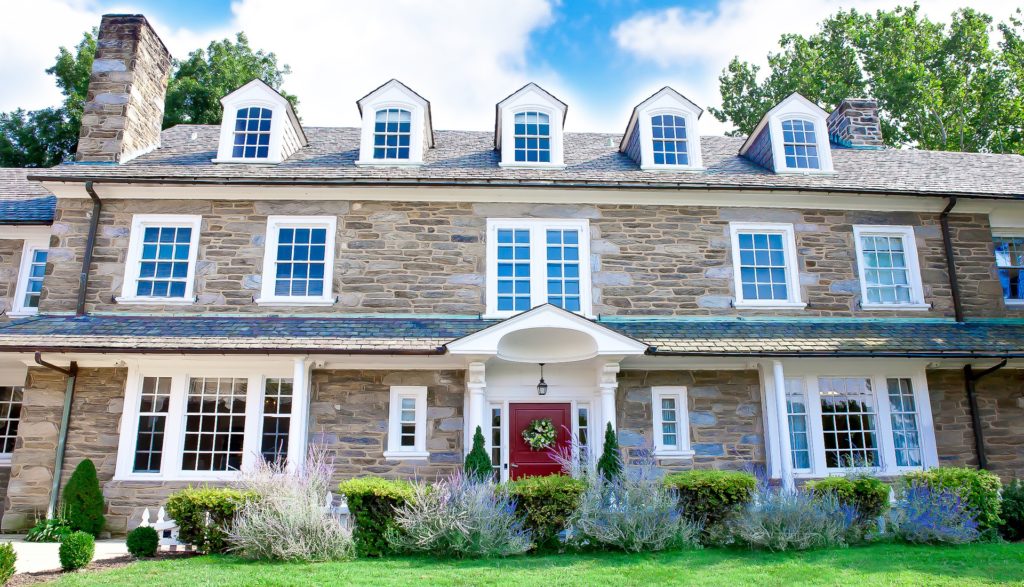
p/c sjvcenter.org
In Priest Psych Unit: Part 1, I gave an introduction to what happens to Catholic priests who are sent to psychological behavioral centers. Some men request a sabbatical there. But other priests (usually the conservative ones) are sent there by a bishop to break them of their orthodoxy (usually hung on the red-herring of “rigorism” or “scrupulosity.”)
Today, I interview a priest in the latter category. In the below interview, he will go by the pseudonym of “Fr. Paul.” However, he is a friend of mine and he is a priest from a different diocese who was sent away for “treatment.”
Before this interview, let me give a brief legal notice: If the mental health center described by Fr. Paul in this article would like to attempt a lawsuit of libel against either of us for this interview, go for it. Be our guest. We are confident in our publication below for at least two reasons. Firstly, Fr. Paul and I are able to prove everything in this interview. Secondly, we have discovery on our side. We would remind you that “discovery” grants that our civil attorneys, even those working on a defense case, have access to the files of the opposing team. That includes all the files of the criminal Catholic priests who have been through your corrupt system.
Fr. David: Even though we are keeping you anonymous, can you tell us a little bit about being ordained as a mainstream diocesan priest before you were a traditionalist?
Fr. Paul: During my seminary years and my short time in priestly ministry, I was beloved by the faithful in my diocese and had many priest friends. I was seen by many as a bright hope for the future of the Catholic Church in the Southern United States. I considered myself part of the movement in the seminary at the time, “To restore the Sacred.” I would say that I was a charismatic conservative, and I was too trusting and naive that the institutional apparatuses of the Church were altruistic.
Fr. David: When were you asked by your diocese to go from active ministry to a psychological care center for priests? To which center were you sent? Why?
Fr. Paul: I was told to go to St. John Vianney Center in Downingtown, Pennsylvania. I was sent there only 9 weeks after my priestly ordination. Without getting into the details of why that was the case, I trusted my bishop that this was the only way I could show good faith and obedience to my superiors given the circumstances. I trusted that they had my best interest in mind, as well as their own. My intention was to “do what I was told” and then be admitted back into priestly ministry at the end of this exercise in obedience to my bishop. Even though my bishop warned me before I went, “there are no guarantees, and this is very serious,” I still had certain hope that I was to remain a priest and go back into ministry. From the start, there was no other option in my mind that I was not going to be allowed back into public ministry.
Fr. David: How many Catholic priests were at St. John Vianney Center (SJVC, seen in picture above) when you were there? Are there other entities in the country like this?
Fr. Paul: There are about 30 people there at any given time. Usually 25 priests and 5 women religious on average. There are perhaps a half-dozen other places like this around the United States and Canada. I thought the co-ed situation at SJVC was imprudent. Turns out that as soon as I left, one of the priests and a nun there for treatment made a rendezvous. Concupiscence will find a way amidst even the best of us. I blame the liberal co-ed policies of SJVC for this. Sadly, both the priest and nun left their vocations after their stays as a result and battle with depression and heartbreak.
Fr. David: What does it cost a diocese per month for every priest sent to a center for psychological evaluation and treatment?
Fr. Paul: From what I understood when I was there, it costs $30,000 a month for a priest to stay for treatment. My stay was six months, so the final bill was $180,000. Times $30,000 a month with 30 patients there a month ≈ $900,000. Times that by 12 months and you get $10,800,000 a year in total revenue.
Fr. David: $10,800,000 a year in revenue! Who pays for that?
Fr. Paul: Typically, as long as SJVC can diagnose you with a psychological disorder, the priest patient’s diocese’s health insurance provider pays for it. Many priests get sketchy diagnoses of “personality disorder unspecified” in order to get the diocese’s health insurance to pay for treatment. It is a massive exercise in medical fraud. The Center has incentive to diagnose the priest falsely in order to capitalize on profits, and the respective diocese has incentive for the priest to be diagnosed falsely in order to use it against the priest later as leverage and control. Now, not all diagnoses are fraudulent, but I would say that was my case and at least a dozen others who were there with me at that time fit this description.
Fr. David: Which type of priests get sent to priest psych units? Are they all perverts? Are they all innocent conservative men who the diocese wants to break?
Fr. Paul: These centers tailor their services based on what the diocese is looking for. There are a mixture of clergy there: perverts, innocent men, suspected boundary violators, those who want a sabbatical, and those with legitimate psychological needs like depression, suicidal ideation, alcoholism, bi-polar, and schizophrenia disorder. They have priests there for the most serious and pathetic of reasons alike: suicidal depression is a most serious condition, but a psych hospital is a bit overkill for one suffering from irritable bowel syndrome (IBS) and a conservative label. If you have ever seen the Christmas movie “Rudolph the RedNose Reindeer,” I would describe it as the “Land of misfit priests.” Simply put, if you or your diocese needs you to be there, you will be.
Fr. David: You mentioned when we first spoke about this interview, that when you first check into the psych unit for priests, there’s a mudslinging or fishing expedition to see what sticks. What did you mean by this?
Fr. Paul: For those priests that are at these places who don’t have a clear reason for being there for psych needs, their diocese will often try to coax the Center into prodding further and deeper into the private life and internal forum of the priest. This coaxing comes in many forms through the initial assessment, risk assessment, polygraphs, Rorschach tests, endless counseling sessions, and lots of gas lighting. For example, I was not prepared to be labeled with a “personality disorder unspecified with histrionic and narcissistic traits”, yet most of us there were given such a diagnosis. It turns out those who run the dioceses that send us there were the real histrionics and narcissists!
Fr. David: What happens in priest psych units?
Fr. Paul: When you first arrive, you are given strict rules, you are to go by your first name and last initial only. No one can know your last name. You are not able to use your titles as “Father” or “Monsignor”. You room phone is tapped. They do everything to strip your identity as a priest away. Eventually, you will realize that you are “a worm and no man” (Psalm 21:7) like Christ on the Cross. You’ll be given a fake diagnosis in order to stay for six months of treatment. You will be told that you will also have to take a risk assessment, which involves a lie detector test, where they will ask you penetrating questions about why you were there, even if it’s because of complaints of teenagers in the confessional. Yes, you read that correctly. I was forced to answer questions about the confessions I heard of teenagers while strapped to a lie detector. My conscience was raped, and no matter how truthful I was, it only made matters worse. When the detector showed that I had only pure intentions with the questions I asked in confession, they then asked other invasive questions that I answered honestly but were not to their satisfaction, so they said “Well, it can be interpreted anyway we want, so you’re still in serious trouble.” On a similar note, I have also heard horror stories of other priests being hooked up to a phalometer during the same interrogation tactics. That sounds over the top, but it did happen while I was there. As a result, I was told by my bishop to, “work the program,” so I did. Part of the program includes a sexual boundaries course where every priest has to write down and share their entire 6th and 9th Commandment History with the class. Each class we heard one priest present his personal history, and I was appalled by the heinous sins I heard. That course was run by a woman religious who had no problem wearing executive suit dresses and a white pearl necklace with matching ear rings. I use the term “woman religious” loosely. There is no telling how much blackmail dirt she has on the clergy of this country. My story was nothing compared to many of the others there. There was such a gap in my experiences to the others there that they asked me on multiple occasions, “So why are you in this class? You don’t belong here.” my only response could be, “I’m here out of obedience and working the program.” The rotten fruit of this type of exercise is that it minimizes your identity to only being a sexual person devoid of a soul, reason, and priestly vocation. It challenges any man to want to remain a celibate. Last I was given a life-coach to help prepare me to leave the center and enter the workforce. My diocese wanted me to write a letter of a leave of absence and work at a secular job, contrary to my clerical state. My diocese was not going to put me in ministry for another year, and that’s if I only did what they required of me… and there were still no guarantees. So basically, I had to tie my own noose, place it around my neck, and jump off the chair. Of course, all under the banner of holy obedience to my bishop.
Fr. David: Considering all those bad things that happened, why do priests obey their bishops in going to such places destructive to their souls and vocations?
Fr. Paul: Throughout our time in seminary, we are fed the mantra to be obedient to our bishops, because they are the Successors of the Apostles. They are the father of our priestly vocations. Obedience is used as a weapon for those in charge. Those in charge do not care about obedience to God or Canon Law. You will discover soon after you’re ordained and sent to a place like SJVC that the 1983 Code of Canon Law is only a suggestion book for how a Local Ordinary governs his Diocese. He can re-write the law as he sees fit if certain Canons do not align with his agenda. “Good” Judicial Vicars are at the service and protection of their Bishop, not the laws of the Church or to God.
Fr. David: What happens to priests who don’t obey their bishops in going to the monkey-house?
Fr. Paul: If you do not comply with your bishop’s command to go there, you will remain permanently outside of public ministry. There is a dilemma of “damned if you do go” and a “damned if you don’t.” You will be labeled as disobedient and non-compliant. You will be black-listed and have no escape to another Diocese for ministry elsewhere. However, if you comply, show good faith, and go to a Center, you will still fall under the diocese’s trap of blackmail discovery and future guarantees of compromise of morals and/or theology. The only way to beat this type of communist governance is to leave it before it destroys you further.
Fr. David: You mentioned on the phone when a priest is sent to a place like this, there is a client and a patient and prisoner. What do you mean by that?
Fr. Paul: This is good distinction to make. The diocese is the client who pays to keep the funny-farm running, and when a priest is presented to the center, their “treatment” he can be going for either an actual therapeutic experience or for an alleged “boundary violation.” In the former case, the priest is treated as a patient with a high probability of returning to ministry. In the latter case, the priest is treated as a prisoner with little chance of returning back into public ministry, even if that priest is found not guilty of serious delicts or crimes. Such was my case. If you ask me, they just didn’t want a charismatic, straight, and conservative priest in their diocese exposing those who are only in the clergy for less meritorious reasons. It all went downhill for me whenever I gave a sermon that Muslims do not worship the same God as Catholics a month prior to hearing those infamous confessions.
Fr. David: Do some priests choose to go to a psychological care center on their own before being suggested there by their bishop? Are some of them healed of their issues?
Fr. Paul: Yes, there are some clergy that self-admit for alcoholism, depression, bipolar incidents, and the like. These guys usually have an easier time at these centers. And I would put them underneath the patient category. Funny story, one priest was there who self reported because he had a vivid schizophrenic dream in which he saw his bishop in burning in hell. When he told us that story, we couldn’t help but bust out laughing.
Fr. David: Is it an exaggeration to say these psychological care centers for conservative priests are nothing more than re-education camps to remove orthodoxy from them?
Fr. Paul: No exaggeration. We get introduced to new-age spirituality with a homosexual slant. The spirit of feminism runs rampant, and straight men are seen as the enemy until they can be curtailed. There is a lot of ecumenism there, too. They teach all religions are equal through so many non-Catholic therapists there. This is a Free-Masonic principle. For example, my psychologist was a gay Episcopalian priest. He encouraged me to take a year off and explore my sexuality while I was working in the real world. He also wanted me to have a woman counselor to help with my integration back into the real world. Everything there is to wear down your morals and religious convictions.
Fr. David: What is the Dallas Charter? What does it have to do with these places allegedly created for the psychological care of priests?
Fr. Paul: We all know the disgraced and late-ex-Cardinal Theodore McCarrick. We know that he, as the President of the USCCB in 2002, was the one responsible for drafting the essential norms of the Dallas Charter. That Charter gives the protocols for how US dioceses are to operate if a priest is either credibly or non-credibly accused of any boundary violations with minors or vulnerable adults. Typically, these suspects are required to go to such a center as SJVC or St. Luke’s for psychological evaluation. Ultimately, these centers continue the work of the late and disgraced former Cardinal Theodore McCarrick to destroy good and wholesome priestly vocations. This dynamic soon becomes a conflict of interest. The sponsoring diocese is the client, the priest is the patient, and the center is at the service of the client, not the patient. Therefore, diagnoses are given for the results that the diocese is looking for. It is not “patient first” treatment as other hospitals. Even if a center like SJVC is on the side of the priest, the diocese can override the center’s findings and suggestions. It is not real treatment at that point. It’s only a pretense to destroy priestly vocations.
Fr. David: For the priests fortunate enough to leave a psych unit, what happens to their vocations?
Fr. Paul: What happens next is simple, either your diocese wants you back in ministry, or they will have you on a wellness plan that will eventually put you back in supervised ministry, or you will be removed from ministry 100%. I had the possibility of the second option of returning back to ministry after a year of working a “wellness plan,” but I was given no guarantees of ministry after that year, even if I was compliant. What tipped me off in my case, was that my diocese asked me to write a letter of a leave of absence. Such a letter was an administrative way for them to show Rome that I wanted to be laicized. Such was NEVER my intention. With such subterfuge afoot, I got a Canon Lawyer and started protecting my “rights”… which turns out that it was a big waste of time and money.
Fr. David: What do you want to tell priests ordered to the funny-farm by their bishops when they have no other crime than being orthodox or conservative?
Fr. Paul: Do you want to submit yourself to a Communist Gulag for the next six months? Are you ready for intercessory finger painting and mindful meditation on the song “the Age of Aquarius”? You would better be served going on retreat at a monastery. Or, better yet just leave the diocese behind and join a Traditional Catholic community because the dioceses are no longer Catholic in its governance and you will only be subjecting yourself to more scrutiny and pretzel-bending that is unwarranted and belittles the Priesthood. You already survived a liberal seminary, why would you want to do liberal seminary 2.0 where the stakes are higher?
Fr. David: Do priests have any rights when ordered to such a place by their bishop?
Fr. Paul: No, your rights are 100% forfeited whenever you enter those places. You will never get 100% of your files back for your own records. You are not the client, so you will do not have the privileges of all your files. It is better to not go at all. If I had known what I know now, I would have fought my diocese tooth and nail before going to such a place. However, God allowed me to see the horrors that happen there, and fortunately, I am still here to tell the tale.
Fr. David: What do you want families of priests to know who have been sent to a psychological care unit?
Fr. Paul: First of all, your experience is not unique. Hundreds of priests have gone through this sort of psychological and spiritual abuse. This is a pattern that needs to be broken, many priests have gone down this track and have formed a support group while living in perpetual exile. Secondly, and most importantly, your diocese will not have your back. Your bishop does not care about you. He is more concerned with what insurance companies and lawyers have to say than your well-being. He is the district manager of the local Catholic diocese-franchise in your area. He has his own reputation and career to protect. He listens to the USCCB, which has a communist “big brother” governing style that only cares about money and keeping the show going. Those that work in the Chanceries do not care about you either. If your bishop does not support you, do not expect support from your brother clergy either. No matter how good your friendships were before, very few will stick out their neck for you, let alone call to see how you’re doing. If you have blood family, then rely on them. If you know apostolic traditional clergy, reach out to them, and they can give you a path forward.
Fr. David: Did you return to active ministry in your diocese? What are you doing now?
Fr. Paul: No, I did not return back to active ministry in my diocese. I had tried the Canon Law routes to see if I can be transferred to another diocese, but to no avail. My former diocese ended up getting what they wanted. I never returned the public ministry with them. However, I was able to find independent Traditional Catholic Clergy, and they took me in under their care. Today I am ministering at an independent traditional Catholic Chapel in the Southern part of the United States.
NB St. Luke’s also has a sordid sexual history you can read in this short article here.
Thanks if you can donate to us traditional priests trying to maintain the ancient faith.