My favorite assignment as a parish priest began in 2017 when I was on-loan to the diocese of St. Augustine in Florida. I lived and offered the Traditional Latin Mass at the Cathedral Basilica of the Immaculate Conception in downtown Jacksonville. The families who attended my Mass loved not only the Mass, but also the Catholic faith. After Mass, a surprising amount of families would come to the basement of the Cathedral to talk to each other and attend my classes on how to use all the tassels of the layman’s Missal for the old Mass. I came to know many of these families. They loved God, the faith, their priests and each other. They were truly Glad-Trads, not Mad-Trads. It was probably my best year as a priest.
One evening in the autumn of 2017, there were about 10 or 20 of us having dinner at the home of some parishioners in Jacksonville. We were all discussing what really happened at Vatican II. Various theories were thrown around, but no one was getting too serious. It was quite a light-hearted conversation, despite the topic at hand. Then, an older Polish gentleman said, “Maybe all the best priests died as chaplains in the two World Wars before they could ever make it to Vatican II.”
I don’t think he expected to be heard with how many people were talking, but there was a stunned silence at the table. Even the older man who said it didn’t realize he may have stumbled upon an accurate and profound theory of Catholic Church history in the 20th century. As the silence subsided, we all congratulated him on his deep insight. But then we returned to our merry conversation.
Put that theory on the back burner while we change gears a bit.
You might be surprised I am not opposed to the fact that there was a Vatican II in the 20th century. The original schemata (theological outlines for the Council) were surprisingly very good. In fact, you can read them all in a couple hours at Unam Sanctam. I did read them, and I found them to be very orthodox, supporting the inerrancy of Sacred Scripture at every turn. Had these remained the original theological guidelines of the Council, it would still have my full support.
However, as most of you know, a small group of unorthodox bishops hijacked the Council. The orthodox bishops were either too weak or too distracted or too stunned or too “obedient” (to man, not God) to resist what was happening. But they should have caught the obvious acts of insubordination against the Faith from the beginning. For example, Monsignor Brunero Gherardini (who attended Vatican II in-person) once told Robert Moynihan about how the bad guys unplugged the microphone of Cardinal Ottoviani for his opposition to the hijacking of the Council by the liberals attending it:
Whenever I think about the Council, I said, I always have one image in my mind: an aging Cardinal Alfredo Ottaviani, now blind, about age 80, limping, the head of the Holy Office and so the chief doctrinal officer of the Church, born in Trastevere to parents who had many children, so a Roman from Rome, from the people of Rome, takes the microphone to speak to the 2,000 assembled bishops. And, as he speaks, pleading for the bishops to consider the texts the curia has spent three years preparing, suddenly his microphone was shut off. He kept speaking, but no one could hear a word. Then, puzzled and flustered, he stopped speaking, in confusion. And the assembled fathers began to laugh, and then to cheer…
Notice above that the liberals at the Council unplugged the microphone of the orthodox Cardinal Ottoviani and laughed him out of the meeting hall of Vatican II as he begged for them to stay true to the perennial faith and ancient liturgy. And this happened on just the third day of the meetings with all the bishops! So yes, people should have caught the shenanigans.
Then, Vatican II goes on-and-on from 1962 to 1965. To this day, many neo-con non-trads still claim that “Vatican II should have been renamed the Council of San Giovanni Rotondo because of how many bishops visited Padre Pio in the proceedings.” However, this is misleading. Although St. Pio was indeed visited many times in Southeast Italy by certain prelates attending Vatican II, Padre Pio declared the following about the Council: “For pity sake, end the Council quickly.”
Because Padre Pio was a mystic (and because he was indeed talking to bishops who were visiting him) knew by the end of the 1960s (as his death approached) that Vatican II’s ambiguity would at best be weaponized against the Faith. At worst, the Council would be used to justify a totally new religion with novel dogma, novel sacraments, novel liturgy and novel discipline. Thankfully, Padre Pio didn’t have to live to see the atomic wasteland that would follow in the wake of the Catholic Church in the 1970s.
Now I want to get to my theory and the title of this article, Who Showed Up to Vatican II? Who Didn’t? Do you remember what the older Polish gentleman said at the beginning of this article in Florida? He casually posited this insightful theory at a dinner in passing: “Maybe all the best priests died as chaplains in the two World Wars before they could ever make it to Vatican II.” His words have been percolating around my cerebrum for the last decade. However, I think I am now ready to build on it with an expanded theory. I can’t prove the following, but it’s my best theory of what happened to our best priests and bishops in the first half of the 20th century.
Earlier this year I went to Croatia and I started asking Catholics about their own persecution under Communists. My host named Ivan came from a family of about ten children and his oldest brother was imprisoned by the Communists from 1945-1950. As I was preparing for this article, I sent a message on WhatsApp to Ivan, asking how many people in that Catholic country of Croatia died at the hands of Communists in the 20th century. He replied: “We could safely say that between 250,000 and 500,000 Croats were murdered by communists. [This included] 664 religious.”
Again, notice 664 religious (priests and nuns) were recently killed by the Marxists in Croatia. I happen to believe that is a low-ball number of clergy if half a million were killed in that small but Catholic country. But even if it were only 664, we have to ask ourselves: What kind of priests were these? Were they the intellectuals? Were they the most courageous in speaking up against communism? Were they the first to put their necks on the line to bring the sacraments underground? I’m sure there were uneducated priests who were killed. I’m sure there were not-so-courageous priests killed among those numbers in Croatia. But everyone knows the first priests that tyrannical regimes target are the smartest and the most courageous. In fact, this is in the play-book for the Communists when taking over a country. By far, the best priests and bishops died in the first half of the 20th century.
As I was preparing for this article, I also sent a quick WhatsApp message to Fr. Ravasi, a priest friend of mine from Argentina whose own father has been imprisoned by the Marxists in Argentina for many years. Fr. Ravasi wrote the gripping book about the Cristero movement called The Cristero Counterrevolution (and the Battle for the Soul of Mexico.) Fr. Ravasi shows in that book how at least 91 priests were martyrs in Mexico in those horrible years.
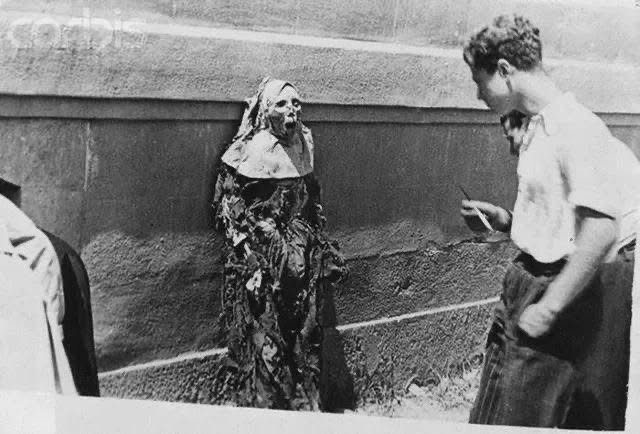
In our texts, Fr. Ravasi then quoted a book titled Hasta El Cielo by Javier Paredes that shows in Spain in the 1930s, 6,562 priests were killed. Among those killed by Spanish communists in the 1930s, this includes 2,365 religious priests and 4197 diocesan priests. Also, 297 nuns were killed in Spain in that decimating decade. Sadly, to prove the religious were not all incorrupt, the horrible sacrilegious soldiers would sometimes disinter the bodies of defunct religious and put them on display, as seen above in the disturbing picture.
Now, let’s put all this together. If just one country, like Spain, saw the killing of her most courageous priests in the first half of the 20th century (exactly 6,562 according to Javier Paredes above) then who was left in the second half of the 20th century to show up to “the Council”? The flamboyant softies.
Truly, many of those 6,500 dead Spanish priests would have become courageous bishops if they had not been killed by the Marxists. This means that not only were brave bishops missing at the Council due to having been killed by the Communists, but also their “spiritual sons” so to speak were missing.
What I mean is that the notion of a “vocation director” is a brand new idea following Vatican II. Before the Council, young men became seminarians usually by way of inspiration and apprenticeship under another priest or bishop. If the good priests and bishops across Europe had already given their lives for Christ, it is no wonder that the weak duds showed up to the Council.
There have always been bad people trying to take over the Church over the last 2000 years. But never have the good been so weak as over the last 70 years. That is why I think Vatican II got hijacked and no one stopped them. The best at the Council were not so good themselves.
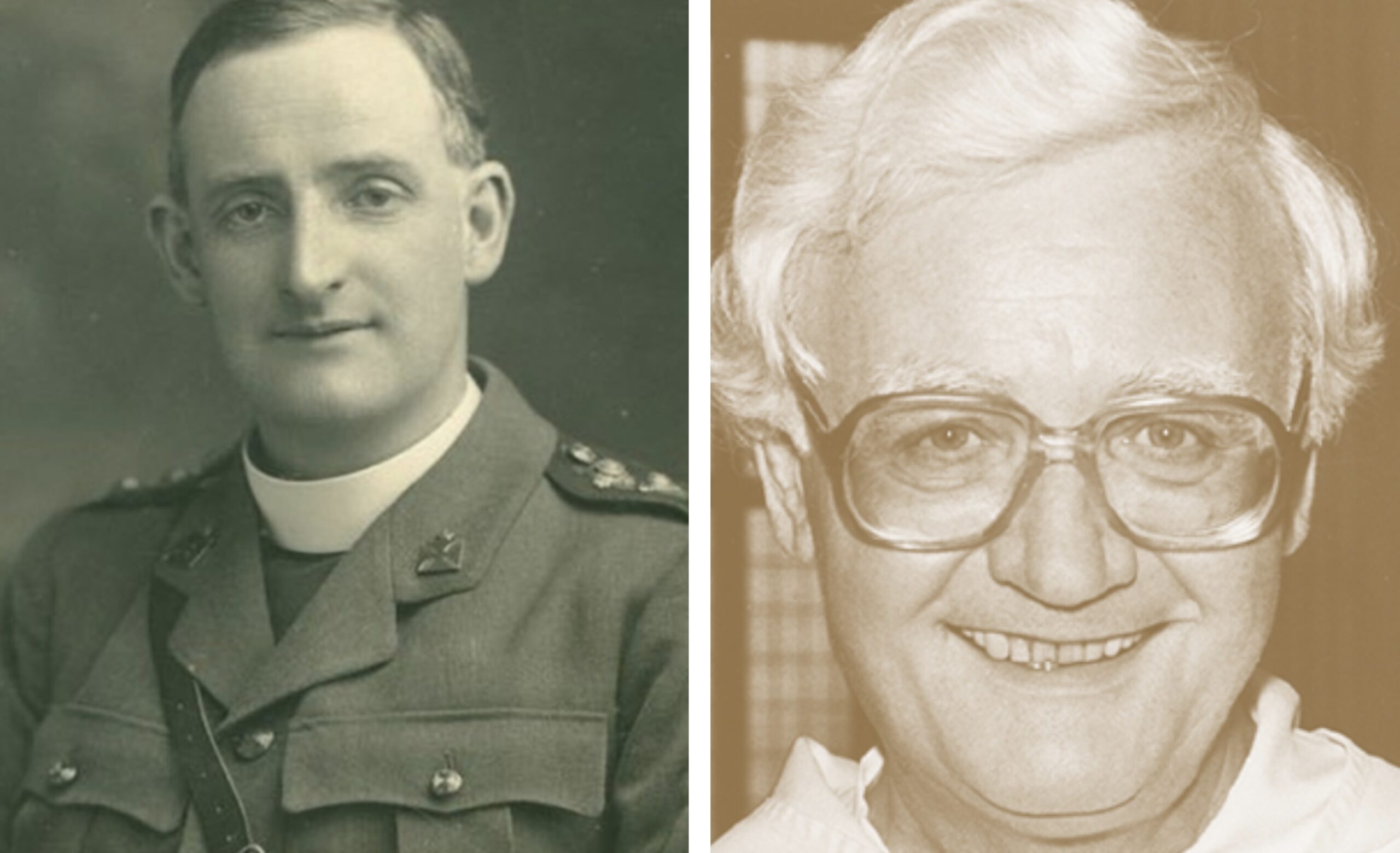
The priest on the right of the featured-image at the top of this article is the Dominican named Fr. Schillebeeckx. He was one of the most active theologians at Vatican II who drafted various documents for the Dutch bishops. The Dutch were widely known as the most unorthodox at the Council. Some might say that Fr. Schillebeeckx was the silent conscience of the leftists in the Catholic Church in the 1960s. As you know, Schillebeeckx’ most famous line at the Council was this: We have used ambiguous phrases during the Council and we know how we will interpret them afterwards.
It is now 60 years after the Council, and Schillebeeckx’ spiritual spawn continue to fulfill his diabolical promise on “interpreting [the Council] afterwards.” Nowadays, many in Rome get away with heresy daily under pretext of “ambiguous phrases,” all of which maintain plausible-deniability at every turn.
Compare him to the priest on the left of the featured-image at the top of this article. That is Fr. Willie Doyle SJ. He was a heroic Irish Jesuit priest who was killed on the battlefield of World War I while bringing the sacraments to his troops. That is the type of man who barely made it to Vatican II because he had already given his life for Christ and his faithful soldiers. But his words encourage us Apostolic Catholics on why we should never depart from our desire to lay down our lives for Jesus Christ, who did not hesitate to die for love of us. Fr. Willie Doyle wrote before dying:
I have long had the feeling that, since the world is growing so rapidly worse and worse and God has lost His hold, as it were, upon the hearts of men, He is looking all the more earnestly and anxiously for big things from those who are faithful to Him still. He cannot, perhaps, gather a large army round His standard, but He wants every one in it to be a hero, absolutely and lovingly devoted to Him.
You can follow me on Telegram. Thank you if you decide to donate to my online teaching ministry.