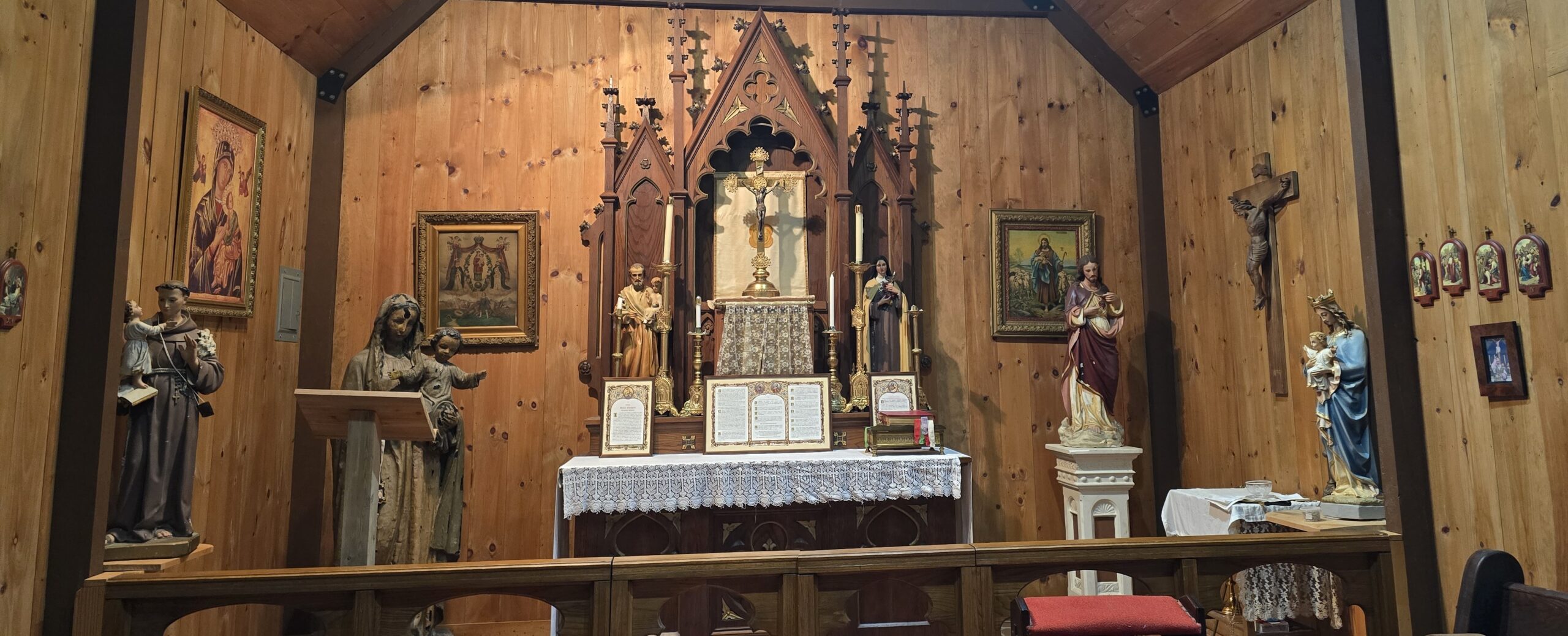
While visiting some new friends, they brought me to an old chapel in the woods (seen above.) On their altar was a Roman Missal published around 1900. As I was thumbing through it, I was amazed at numerous feasts that are now suppressed. I snapped several pictures of these optional feasts.
In writing the below article about them, I am not saying the Holy Spirit has been inactive on earth since the 1950s. But I am saying these beautiful liturgical propers should probably be put back on our Roman calendar by a future Pope, at least granting the priest a possibility of using them as optional propers.
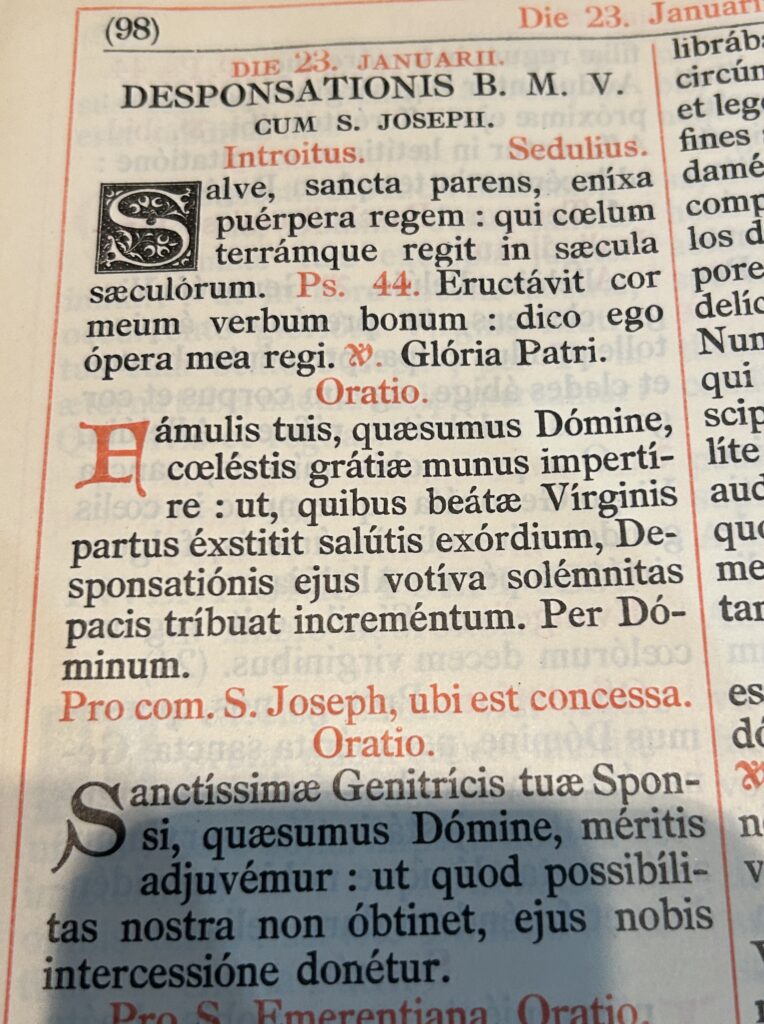
Above is the Desponsationes or Espousal of the Blessed Virgin Mary to St. Joseph on 23 January every year. Notice there are two stacked collects, one in honor of the Blessed Virgin Mary and one in honor of St. Joseph. This feast shows that St. Joseph was not just a “fill-in” as a random foster-father, but that he was chosen from before all time to be the most chaste guardian of the Holy Family. Although not all couples are called to continence like the Holy Family was, all are called to chastity. This feast helps married people see their most supreme example of holiness.
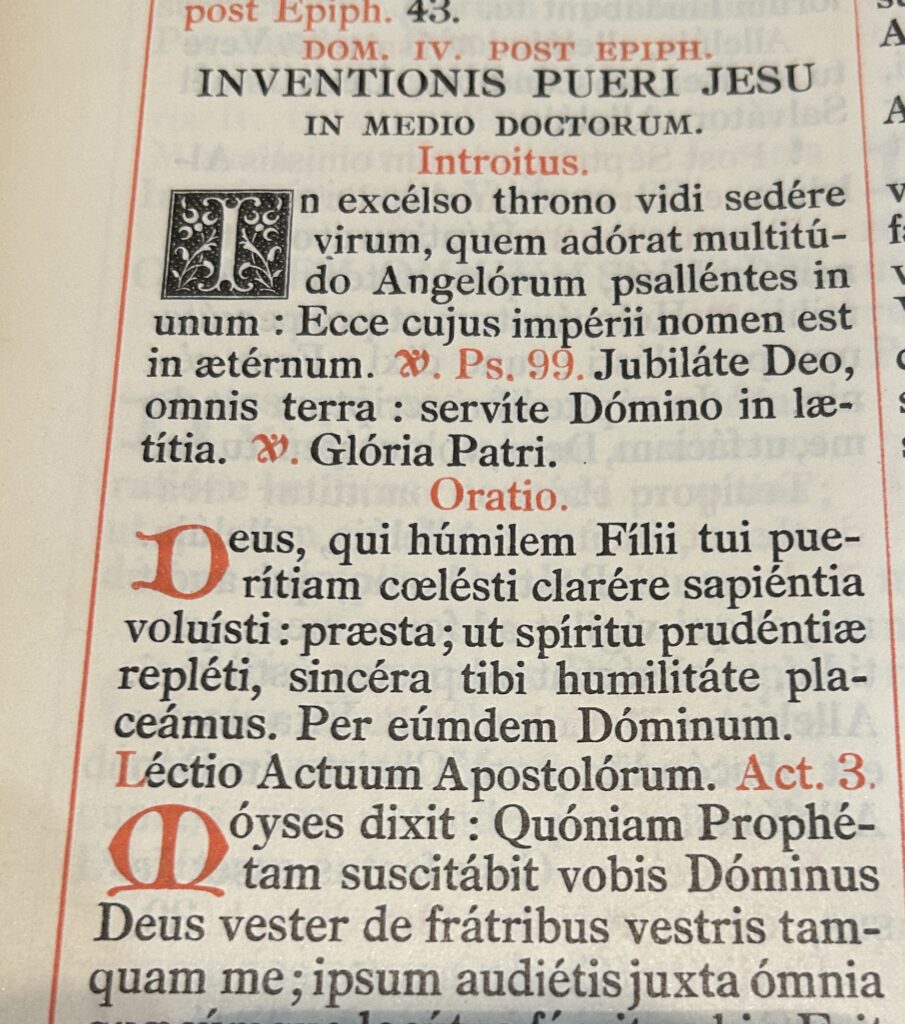
Above is the Finding of the Child Jesus Amidst the Teachers in the Temple on the Fourth Sunday after Epiphany. It makes sense that this feast is put after Epiphany in the liturgical year. As a side note, today (5 May) is the feast of Pope St. Pius V, and many of these feasts would have been in his own Roman Missal.
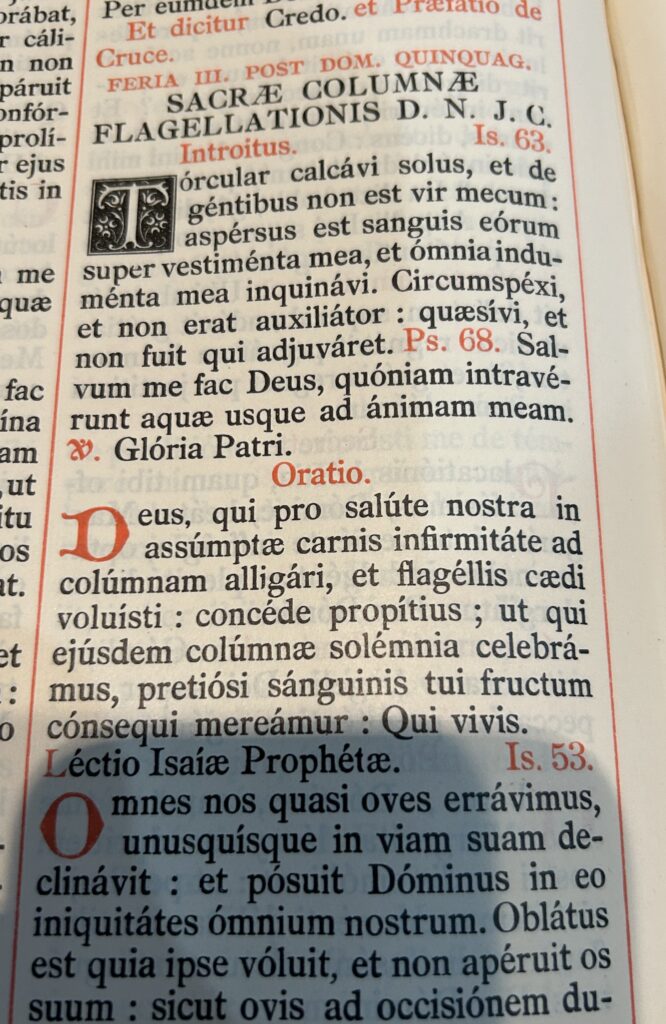
On the Tuesday of Quinquagesima Week (the day before Ash Wednesday) Catholics honored the Sacred Column of the Flagellation of Our Lord Jesus Christ. Notice that liturgical day does not only reverence the scourging of Christ, but even the very pillar upon which the torture happened. The lesson seen above from Isaiah predicts how Christ was led in silence to that Pillar of Flagellation: All we like sheep have gone astray, every one hath turned aside into his own way. And the Lord hath laid on Him the iniquity of us all. He was offered because it was His own will, and He opened not His mouth. He shall be led as a sheep to the slaughter, and shall be dumb as a lamb before His shearer, and He shall not open His mouth.—Isaiah 53:6-7.
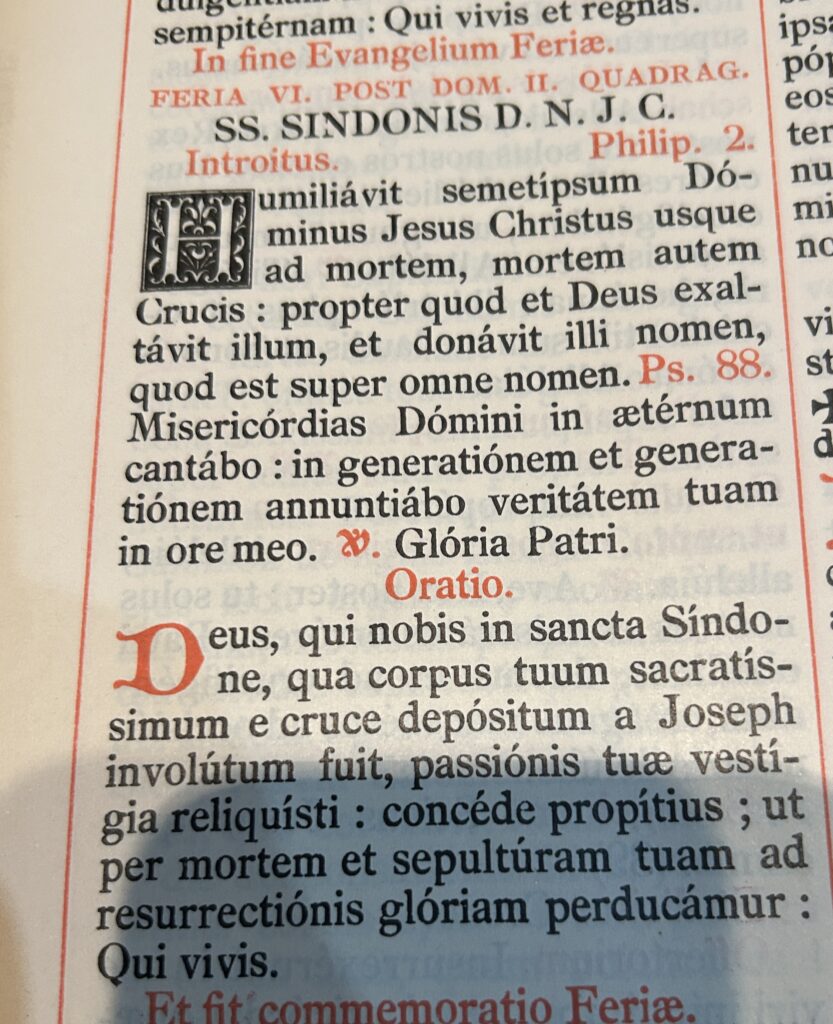
On the Friday of the second week of Lent, Catholics celebrated the Holy Shroud of Our Lord Jesus Christ, as seen above. This is, of course, a reference to the Shroud now kept in Turino, Italy. The above proper mentions how the most holy body of Jesus was taken down from the cross and given to Joseph of Arimathea for burial. It is astonishing that that Shroud of Turin itself had an ancient feast on the old Roman Calendar long before it was discussed on, say, Joe Rogan or Shawn Ryan.
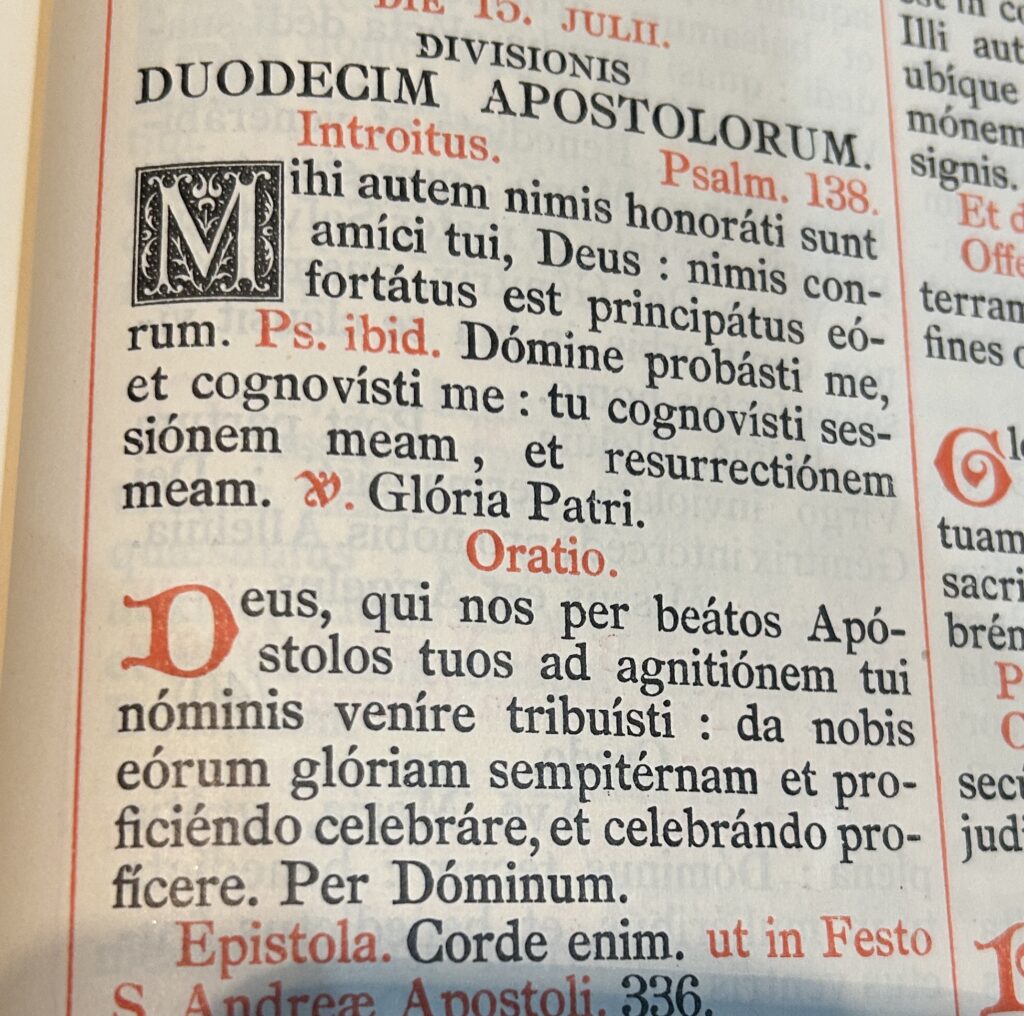
The 15th of July every year contains the propers for the Division of the Twelve Apostles. Nope, it’s not the Apostles arguing and getting divided. It’s a reference to how St. Peter divided the entire world among the Apostles on Pentecost and sent them there. Perhaps it could be better translated as the Sending of the Twelve Apostles to every corner of the world. This global division of evangelization, teaching, preaching, sacrament—and prophesied martyrdoms—was done not only by country—but even by continent. This included all Apostles, Matthias having replaced Judas in the above numbering. Today’s hidden feast celebrates the light of Christ reaching the farthest ends of darkness of the world by His own holy friends.
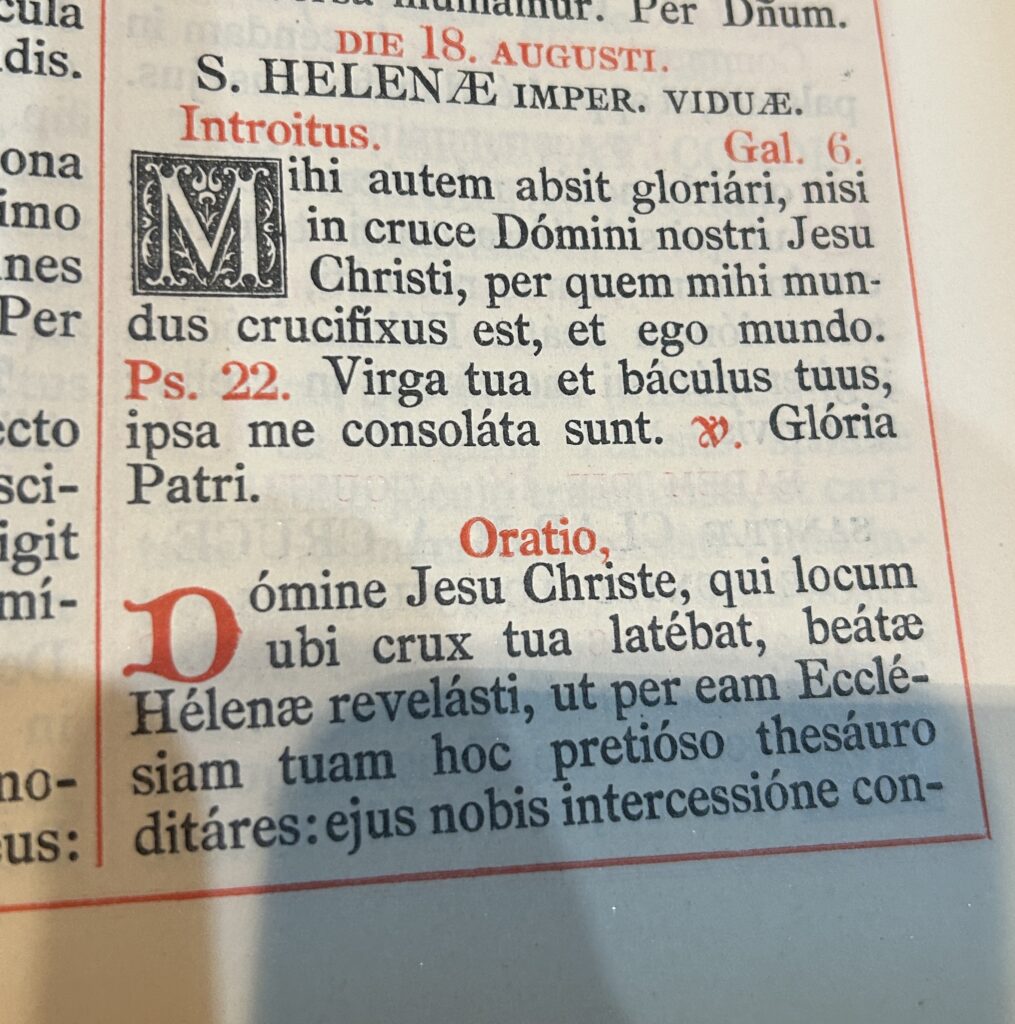
The above optional feast was that of St. Helen, Empress and Widow, which fell on 18 August every year. You can see her collect (proper) refers to her finding the true Cross in Jerusalem. Two days ago, in the pre-55 calendar, was the actual feast of the Finding of the Holy Cross. That also is a suppressed (or at least downgraded) feast. I preached my weekend sermon on it here just a couple days ago.
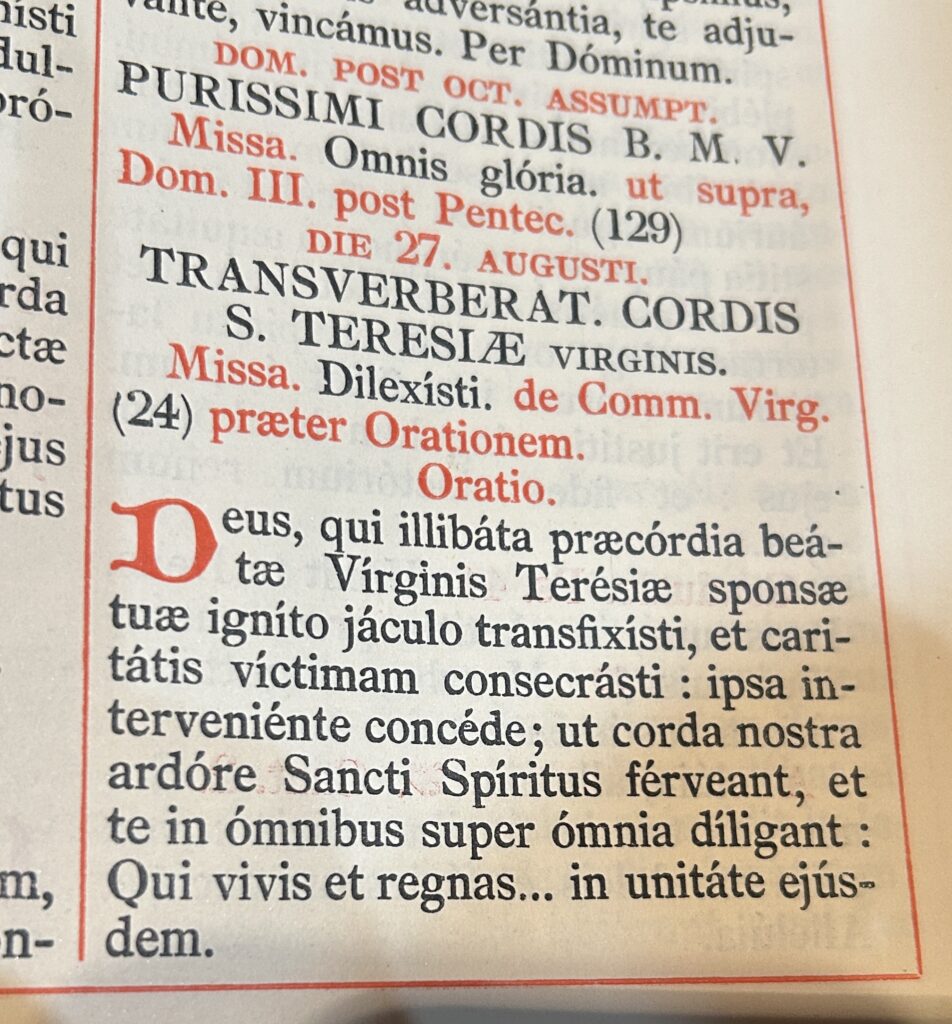
Above, you can see two amazing feasts. On the Sunday after the Octave of the Assumption, the Roman Catholic Church used to celebrate the Most Pure Heart of the Blessed Virgin Mary. And on the 27th of August was the Transverberation of the Heart of St. Teresa of Avila. That last mysterious liturgical day of unique propers refers to the piercing of St. Teresa’s heart in love that brought her to the spiritual marriage, a point of union with God even higher than the unitive stage of prayer (which St. Teresa had attained to before that transverberation.)
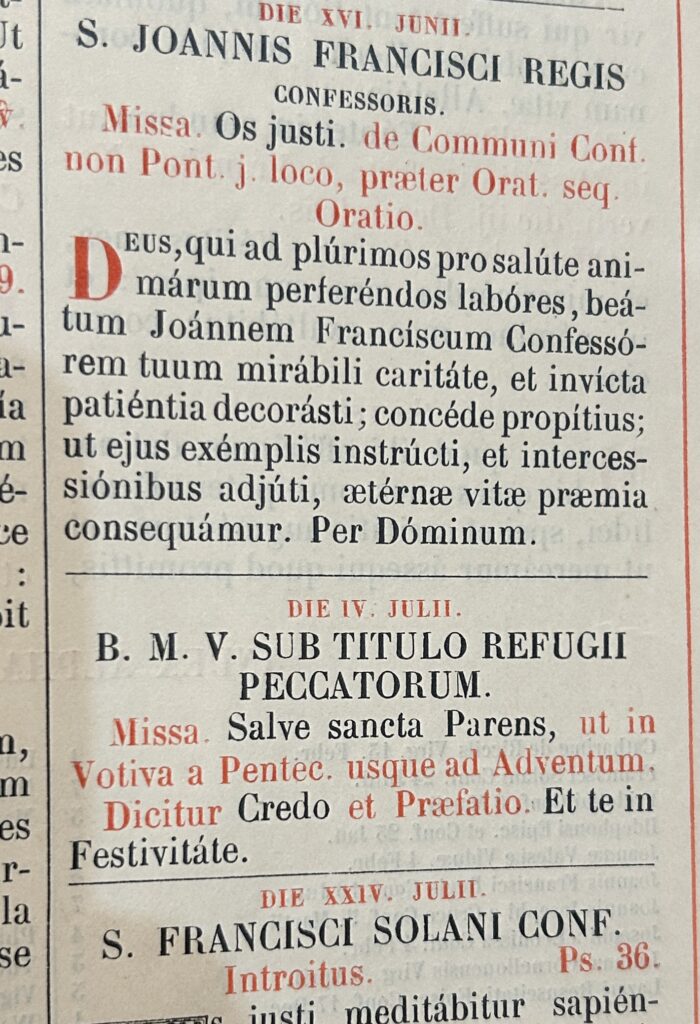
On 16 June, the Church would celebrate St. John Francis Regis. This one is important to me since I graduated Regis Jesuit High School in 1996. Then, you see the reference to the Blessed Virgin Mary Under the Title of Refuge of Sinners. I especially love this feast. Archbishop Fulton Sheen writes about Mary as “Refuge of Sinners” being the very last hope of hardened sinners in his book, The World’s First Love.
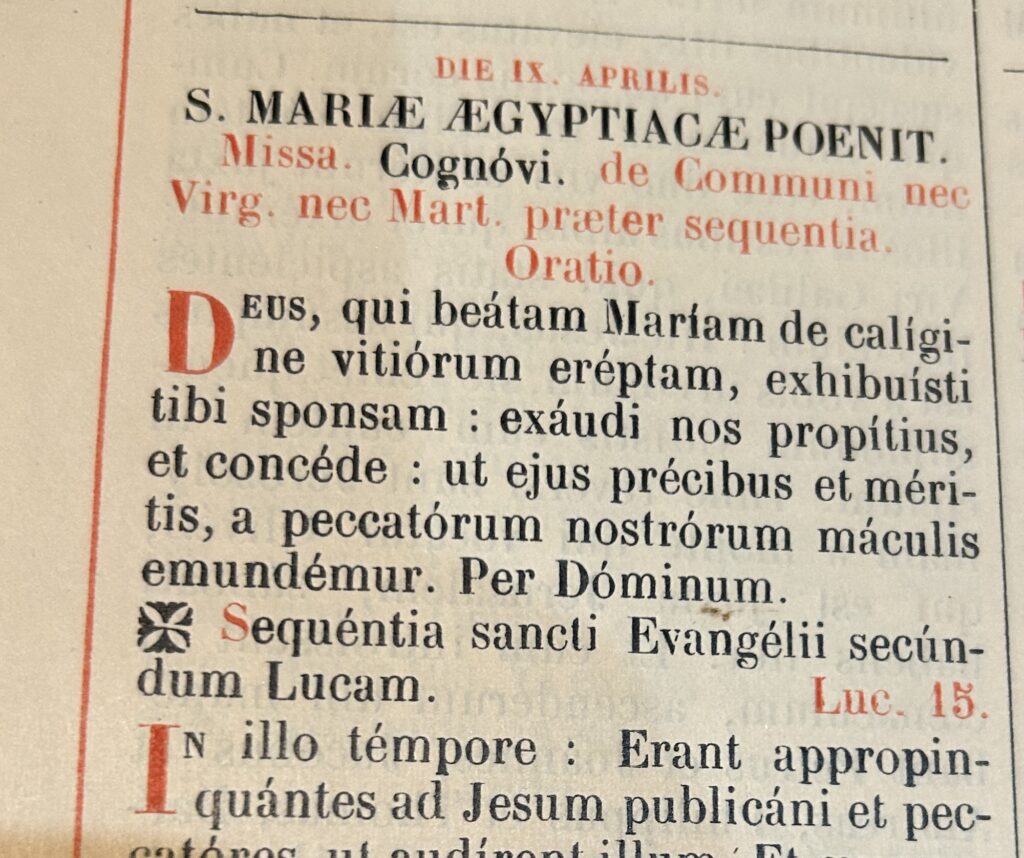
This last one was shocking to me. I knew the Eastern Catholic Churches (and Eastern Orthodox) celebrate St. Mary of Egypt the Penitent on a Sunday of the Great Fast and/or at the beginning of April. But she is also apparently in the ancient Roman Catholic calendar. Notice above the first lines of the Collect from the old Missal read: O God, who rescued the Blessed Mary from the heat of vices, You then showed Yourself to be her spouse…
In the old calendar, “penitent” was its own category for women who died as non-virgins and non-martyrs. Another example of an official “penitent” would be St. Mary Magdalene, still listed as such in the old Divine Office. St. Mary of Egypt lived a life much more wicked than even that of the Magdalene, yet both were eventually called to be His spouse, as mentioned in the above collect. Yes, penitents can become spouses of God Almighty.
St. Mary’s of Egypt’s full story is phenomenal and it will bring untold amounts of hope to any incurable addict or current penitent.
Thank you if you would like to donate to my teaching apostolate or follow me on Telegram.