Many couples have been helped by a book called Love & Respect: The Love She Most Desires; The Respect He Desperately Needs. It was written in 2004 by Emerson Eggerichs, a non-Catholic but Christian author.
Here’s the basic online description: Women primarily need love, whereas men primarily need respect. Husbands and wives are wired differently, so misunderstandings often arise not from malice, but from missing the other’s core need.
According to Eggerichs, the “Crazy Cycle” is when a wife feels unloved, she reacts in ways that feel disrespectful to her husband. In response, he reacts in ways that feel unloving to her, causing a destructive cycle. The “Energizing Cycle,” on the other hand, is when a husband shows love (even without experiencing respect from her.) Then, the wife is likely to respond with respect. Similarly, when a wife shows respect (even without feeling love), the husband is likely to respond with affection and warmth to her.
It makes a lot of sense to me. A Catholic husband and father I know has recommended that book with great success to many other Catholic couples.
But the following reveals that any truth found by a Protestant was probably first discovered by a Catholic saint. Here are the words of 4th century doctor of the Church, St. John Chrysostom:
So if you think that the wife is the loser because she is told to respect her husband, remember that the principal duty of love is assigned to the husband, and you will see that it is her gain. “And what if my wife refuses to obey me?” a husband will ask. Never mind! Your obligation is to love her; do your duty! Even when we don’t receive our due from others, we must always do our duty. Here is an example: Paul begins this passage by saying, “Be subject to one another out of reverence for Christ.” If your spouse doesn’t obey God’s law, you are not excused. A wife should respect her husband even when he shows her no love, and a husband should love his wife even when she shows him no respect. Then they will both be found to lack nothing, since each has fulfilled the commandment given to him. This, then, is what it means to marry in Christ: spiritual marriage is like spiritual birth, which is not of blood, nor of the will of the flesh.—St. John Chrysostom
Let’s look at that sentence-by-sentence. Below, St. John will be in italics and my commentary will be in bold.
St. John: So if you think that the wife is the loser because she is told to respect her husband, remember that the principal duty of love is assigned to the husband, and you will see that it is her gain.
Me: Man was made to love in order to receive. Woman was made to receive in order to love. The primacy of the self-donation falls to the man. But that doesn’t mean a husband just gives a woman whatever she wants. We know this especially when we consider how Adam first sinned in the garden by failing to protect Eve from Satan (and in some sense—from herself!) and also by failing to lead the first family.
Above, St. John Chrysostom is basically saying that the husband still has the more difficult job in leading the wife. Thus, she should follow him in all his leadership roles (except a command to sin, of course, and probably anything that goes against obvious common sense.)
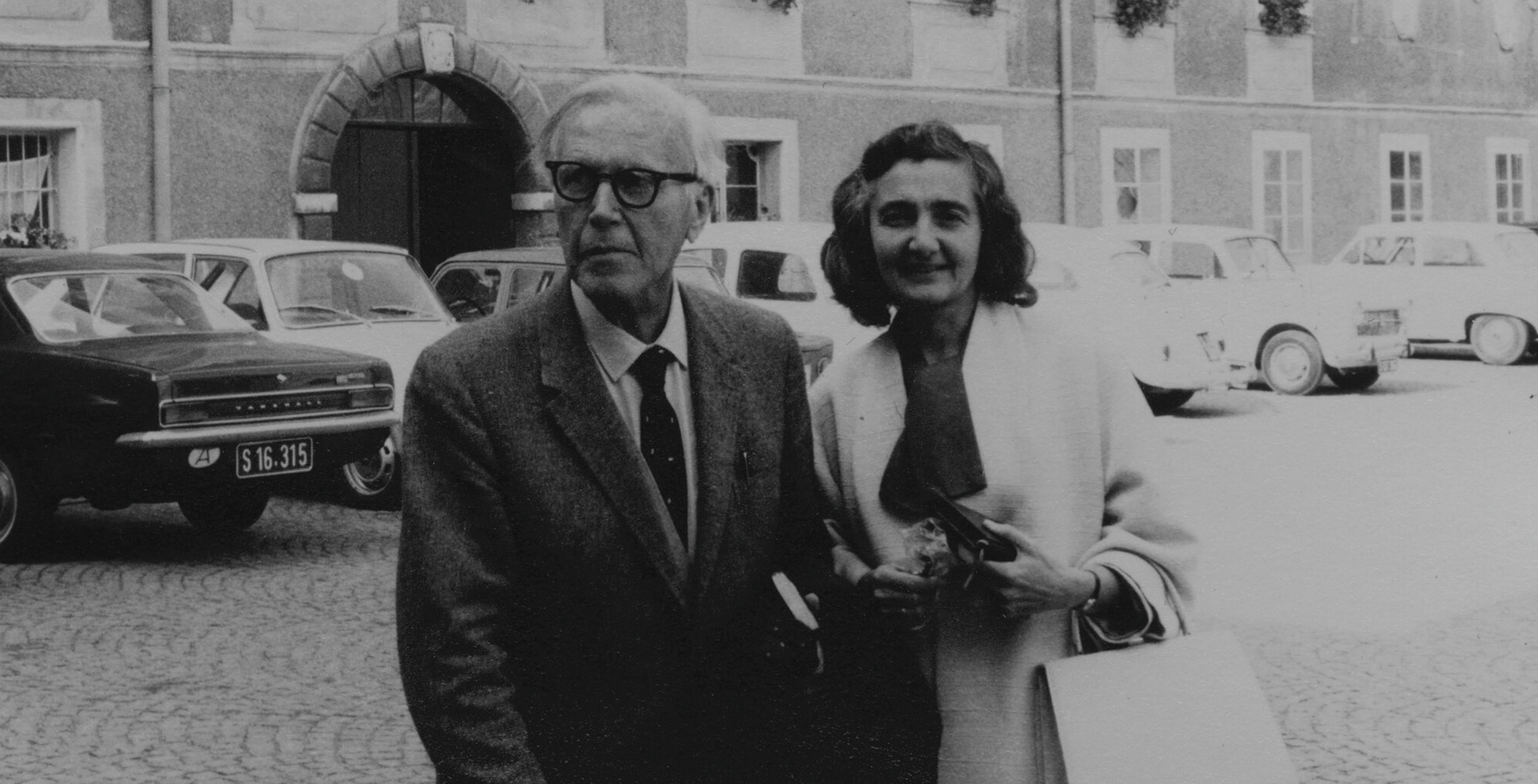
An older translation of her call to “respect her husband” above is “reverence her husband.” That reminds me how the recently-deceased Alice von Hildebrand was once asked the number one virtue missing between spouses and friends, and she replied without hesitation: “reverence.” Alice had such reverence for her husband Dietrich (together above) that she would constantly tell people how much she admired him as basically her hero. She even insisted on him being her own hero into old age.
Of course, a husband today who described his wife as his “heroine” would be accepted by society. But a woman who describes her husband as her hero (like Alice described Dietrich) would be completely mocked by a culture like ours so sunk into feminism. Why is that? Because feminism is programmed to disrespect man—the very thing he needs to keep going as a good leader of a family.
“And what if my wife refuses to obey me?” a husband will ask. Never mind! Your obligation is to love her; do your duty! Even when we don’t receive our due from others, we must always do our duty. Here is an example: Paul begins this passage by saying, “Be subject to one another out of reverence for Christ.”
Here, St. John is saying a man is called to love his wife even if she acts distasteful to him. Why? Because God shows His love for us in that while we were still sinners, Christ died for us.—Romans 5:8. Similarly, the husband is to love his wife as Christ loved the Church. St. Paul continues in the same chapter: For if while we were enemies we were reconciled to God by the death of His Son, much more, now that we are reconciled, shall we be saved by His life.—Romans 5:10.
So also, a man is called to sacrificially love his wife, even when she doesn’t act as smart or lovely as he wants her to be.
I often meet Catholic couples and one of them has had a reversion to the Faith and one has not had a reversion (or conversion.) When the wife is following Christ and the husband is not, I will often get emails from such women asking if they still have to obey their husbands.
But when the husband is following Christ and the wife is not, I’ll often get emails from such men asking how they can lead a wayward family who doesn’t listen to him. The beginning of the answer is found above that a man must do his best to lay down his life for his wife, even if she doesn’t deserve it (much as the Church rarely listens to Christ today!) This is, of course, tied to the man’s first calling as a Catholic to improve his own interior life (relationship with Christ) and his a life of virtue both inside and outside the house.
If your spouse doesn’t obey God’s law, you are not excused. A wife should respect her husband even when he shows her no love, and a husband should love his wife even when she shows him no respect.
Is it amazing that a 4th century unmarried Catholic saint came to the same conclusion as a 21st century Protestant married man? No, for we celibate priests (and bishops like St. John) have artistic distance into the lives of many families. So, we should not be shocked at the insight. Furthermore, the saints are so close to God in the interior life that tremendous amounts of wisdom are given to them in both matters of God and man.
Much like the main thrust of the book Love and Respect, we see in the quote above from St. John that a marriage can only begin to be healed if a man loves his wife, whether she deserves it or not. Similarly, a marriage can only begin to be healed if a woman respects her husband, whether he deserves it or not.
I’m not saying a Christian is called to be a doormat, but rather that good spouses often harm the other through miscommunication on love and respect. This is especially difficult when they’re wired for complimentary aspects of being honored by the other.
I suspect that the author of Love and Respect comes to the conclusion that the only way to move a marriage from what he above calls the “crazy cycle” to the “energizing cycle” is for one of the spouses to do the right thing on love and respect, regardless of projected outcome in the decisions of the other spouse.
So this means that, within certain limits, the man loves the woman even if she doesn’t respect him. Similarly, within certain limits, the woman respects the man, regardless of what she thinks he deserves. This courageous decision by the first spouse to act virtuously might inspire the second spouse to respond with what the other longs for (respect and love, respectively.) Eggerichs goes even further, and says this should be “unconditional.”
Then they will both be found to lack nothing, since each has fulfilled the commandment given to him. This, then, is what it means to marry in Christ: spiritual marriage is like spiritual birth, which is not of blood, nor of the will of the flesh.
I have not read Love & Respect: The Love She Most Desires; The Respect He Desperately Needs. But the title says it all, and it seems to gel with the above words of St. John Chrysostom.
Woman is always looking to be re-made in a manner day-by-day as special—even to the point of being irreplaceable—via the admiration and emotions of her husband. She wants to be loved via affection. Man, on the other hand, is greatly defeated if his wife disrespects him, especially if she does this in front of others.
Let me give an extreme example to make a basic point.
Even the most obtuse of men know that calling his wife “fat” in front of others at a nice dinner would be one of the most destructive things he could do to make her feel unloved. Why then do most women not realize that disrespecting their men in front of others (maybe by making fun of how he can’t keep a job?) at a fancy dinner would be just as destructive as him calling her “fat”?
Because we live in a feminist culture, unlike that of St. John.
I keep finding that 98% of Catholic women out there who are actually feminists do not truly believe they are feminists, but rather erroneously believe that only the women one-click to their left are the real male-disrespecters. (Re-read that last sentence if it didn’t make sense.) Thus, if St. Chrysostom were alive today, he would keep all his words above, but perhaps he would add something more about women building up with words of affirmation their husbands, even when such men feel defeated by the world or even by their families.
If alive today, St. John would probably double-down on his insistence that a wife should respect her husband even more than he even deserves. This would begin to heal many of the struggling Catholic marriages out there. This is true, especially as most men already know not to call their wives “fat” in front of others.
In short, a Catholic man should show affection to his wife, even when he doesn’t feel like it. A Catholic woman should show respect to her husband, even when she doesn’t feel like it. This might feel unfair or vulnerable at times, but it’s usually the recipe for happy spouses and happy children.
Thank you if you can donate to my mission of teaching the ancient faith with new applications for families.