NB Because this article is so long, yet so important for the month of November, it will be my only article this week (except for perhaps another one on the infrequently-viewed Life-Update pull-down.)
November is the month where we pray for our faithful departed, for those who repose in the Lord. Clearly, those in heaven cannot benefit from our prayers. Similarly, those in hell cannot benefit from our prayers, either. Thus, our prayers on earth may only benefit those who are currently in Purgatory. Purgatory is that temporary state of purging fire that heals the deceased who are saved, yet must still answer to God’s justice for those sins for which they have not yet made reparation while they were on earth. All those in Purgatory will eventually make it to heaven. Thus, those Poor Souls in Purgatory are God’s elect who are definitely saved (no chance of hell.)
But as the Catholic Church rejects a “once-saved-always-saved” theology (the error that all those who accepted Christ at least once in life before death are definitively saved) then how do we pray exclusively for the faithful departed? That is, it might seem unfair that the Catholic Church would say: “Pray only for the dead in Purgatory, oh, but by the way, you can’t really know who is there in the first place.”
As we will see, God gave His Divine Revelation to the Catholic Church perfectly. This is true not only for salvation of the dead, but also for the spirituality of those still on earth. Traditional Catholicism again has the answer that will help post-modern man not only in his supernatural quest to seek Jesus Christ, but also his own natural psychology towards the dead that has become very disturbing.
We are now going to look at seven things that Catholics forgot following the 1960s about Catholic Church teaching on those who have gone before us.
1) The Mystery of the Dead. Unless your beloved family members have been officially canonized by the Catholic Church (or died an obvious martyr) then you cannot pray to them. Nor can you assume they are saved. This means you should pray for them the rest of your lives in case they are in Purgatory. This seems harsh, but if the Catholic Church did not teach that, we on earth would start to live in a state of presumption. Why? Because Protestants believe in a “once-saved always-saved” theology and this has led to tremendous presumption among many of them. That is, they don’t believe they can lose their salvation after they have accepted Christ as Lord. Thus, this means they get to judge the dead as saved or not based on simply if they accepted Jesus on earth. Think about that: Protestants steal from God His own judgment of a soul by pretending to know where that person is. Truly this is theft against God Himself. But again, this is entirely based on a “once-saved, always-saved” theology. There are hundreds of quotes from the Bible to disprove this diabolical theology, but here are three:
–Not everyone who says to Me, ‘Lord, Lord,’ will enter the kingdom of heaven, but the one who does the will of my Father who is in heaven.—Jesus Christ in Mt 7:21.
–And then many will fall away and betray one another and hate one another. And many false prophets will arise and lead many astray. And because lawlessness will be increased, the love of many will grow cold. But the one who endures to the end will be saved.—Jesus Christ in Mt 24:10-13.
–But I discipline my body and keep it under control, lest after preaching to others I myself should be disqualified.—The Apostle Paul in 1 Cor 9:27.
So, notice, if one of the greatest saints of the Catholic Church (and about the only saint honored by Protestants!) St. Paul believed he could lose his salvation, then so also we must proceed exactly as St. Paul says: Work out your own salvation with fear and trembling.—Phil 2:12 You see, we do not know if we on earth are going to be saved. Because of this, we cannot declare those who have gone before us to be saved (again, unless canonized or unless you saw them take a bullet to the head in front of an abortion center.)
Thus, we never talk about our beloved as already being in heaven. Of course, this makes Catholics look like curmudgeons around Protestants when we can’t chime in with them and say “Oh yeah I know my grandma is saved like your grandma looking down on us both from heaven!” but really this is why only the Catholic view of the afterlife maintains true humility on earth: “Neither do I know for sure if I am going to be saved, nor do I know if grandma was saved.” Thus, we pray for our late grandma for the rest of our lives. We absolutely must refrain from stealing judgment from God Almighty by pretending to know where someone is. We are not their judge.
So, if I die before you, please pray for me the rest of your life. I’m not saying that out of false humility. I very much believe that if I be saved, I may have many harsh years in Purgatory.
2) Connected In Charity. Let’s say I die before you and I don’t die by taking a bullet to the head in front of the abortion center (obvious martyrdom.) Many of you would pray for me for a week. Less of you for a month. In a year, very few of you would be praying for me. You might already assume I went from Purgatory to heaven. But what if that’s not true? What if all my friends, family and benefactors let me languish in Purgatory for 14 years or 73 years or 200 years thinking I only did a week there? That would be extremely uncharitable. Thus, assuming someone is in Purgatory the rest of your life may be the most charitable thing you could do.
Again, I know this sounds dark to some of you. But here’s the beautiful thing about this theology: First of all (as you all know) God will re-direct your prayers to someone else in Purgatory if your loved one is already in heaven with the beatific vision. Secondly, praying for your faithful departed keeps you connected in charity to them for the rest of your life.
Sorry to pick on Protestants again, but why go to a cemetery to visit your loved ones if you’re absolutely sure they’re already in heaven? The fact is this: Those we have falsely-canonized, well, we forget about them quicker than we would like. But if you lovingly assume a deceased family member might need your prayers over the rest of your own time on earth (even if that dead person was a near-saint in life) then you stay connected to that person in supernatural charity even if he or she is already in heaven. In other words, having Masses for someone already in heaven brings you closer to them! Did you ever think about that? Not only does God re-direct your prayers for someone else in Purgatory, but if you mistakenly (so to speak!) pray for someone already saved, that keeps you in their lives and them in yours. All this is to say: Praying for someone the rest of their lives doesn’t mean you have to picture them in the flames of Purgatory for your next fifty years on earth.
As many of you know, my mother passed a couple years ago. The month leading up to her death was quite a battle for her soul. Even though she faithfully prayed the Rosary every day of her life the last five years, she seemed at the end to rebel against God a bit because of not understanding her own suffering. But in the last few hours of her life she called whole-heartedly on Jesus with me at her side giving her all the sacraments. My whole family was there for her passing. She died on the fiftieth of fifty Hail Marys we all prayed in the Rosary. Not to sound too dramatic, but we really got some palpable miracles just before, and just during, and just after her death to indicate she was saved.
But I’m going to put Catholic dogma ahead of signal graces. Not only will I refrain from saying “My Mom is definitely in heaven” but I won’t even say “My Mom is definitely saved.” Of course, with those miracles at her bedside and her praying the Rosary and receiving all the sacraments, I do believe she is saved. Personally, I think she probably went from Purgatory to heaven pretty quickly based on all the suffering her whole life, especially her last month on earth. Maybe a week in Purgatory?
But no, I am going to put Catholic dogma ahead of what I think of my own mother. I am not her judge. That is why I have said the name “Claire” (my own mother’s name) in the memento for the dead at probably 300 or 400 of my own private Masses since her passing. Even if my mother already be in heaven (let’s bring back the subjunctive tense for things that might be) I know she loves those Masses connecting me to her in charity here on earth. This is true, even if she doesn’t need them, per se. So also, you can have a hunch someone is already in heaven. But praying for them is a continual act of love to them from the point of view of here on earth beholding the afterlife.
Somehow it will bring you closer to them even if they’re in heaven. And if they’re in Purgatory, they need your prayers more than you can imagine. The Risk-Benefit ratio on this one is a no-brainer: Pray for the dead constantly, the rest of your life.
3) Souls In Purgatory Can Pray for Us, But Do It The Right Way. As you probably know, the souls in Purgatory can pray for us and they have tremendous suffering to offer on our behalf. Should we ask them for prayers? The problem with saying “Yes” is that we are back in the conundrum of thinking we know who is in Purgatory. So, St. Alphonsus Liguori has an interesting work-around. St. Alphonsus says we should ask Jesus Himself for anyone we know in Purgatory to pray back to Jesus for us. Of course, any Protestant reading this say would say this theology sounds insane: “So Catholics pray to Jesus to then ask the soul in Purgatory to intercede right back to Jesus our only Mediator? This is why I could never be Catholic!”)
I admit this does sound too complex, at first. But St. Alphonsus does not want us communicating with any of the damned. Yet he admits the prayers of the souls in Purgatory are very powerful for our lives. So, in light of the previous paragraphs about my mother, I will occasionally pray: “Jesus, please ask my Mom to intercede for me if she’s in Purgatory.” Yes, I may do this after praying for her soul myself. It sounds complex, but it’s not. It simply avoids presumption and keeps us connected in charity to those who have reposed in the Lord. And it keeps us from communicating with souls in hell if—God-forbid—we misjudged them as good on earth entirely and God judged him or her as worthy-of-hell.
4) Pray All of November. In the old rite, not only can a traditional priest like me do three Traditional Latin Masses (TLM) in black on All Souls (Normally 2 November, but 3 November this year of 2025) but there’s even an Octave of Masses (eight days of Masses every year) in black vestments for the faithful departed. This is done the first week of November of every year. In fact, all of November is dedicated to the Holy Souls (also called the Pour Souls) in Purgatory. So, you should pray for your faithful departed all month. In fact, you should pray for them all year, but that’s hard for some people to remember.
Thus, God programmed Catholicism for us to especially pray for the dead in November. A plenary indulgence is available every day from November 1 to November 8 if you go to confession, are detached from venial sin, go to pray at a cemetery and also pray for the Pope’s intentions. (Of course, in between having an actual Catholic Pope, we can obviously pray that the Church receive one, or pray for what would be a holy Pope’s intentions.) The point is this: Make November all about those who repose in the Lord. And never declare your loved ones to be already in heaven.
5) Praying for Non-Catholics? Mr. Matthew Plese at the Fatima Center has an excellent article quoting the 1903 Catholic Encyclopedia on this topic. Notice closely the difference between the two words private and public which I will put in italics, too:
“There is no restriction by Divine or ecclesiastical law as to those of the dead for whom private prayer may be offered – except that they may not be offered formally either for the blessed in Heaven or for the damned. Not only for the faithful who have died in external communion with the Church, but for deceased non-Catholics, even the unbaptized, who may have died in the state of grace, one is free to offer his personal prayers and good works; nor does the Church’s prohibition of her public offices for those who have died out of external communion with her affect the strictly personal element in her minister’s acts. For all such she prohibits the public offering of the Sacrifice of the Mass (and of other liturgical offices); but theologians commonly teach that a priest is not forbidden to offer the Mass in private for the repose of the soul of any one who, judging by probable evidence, may be presumed to have died in faith and grace, provided, at least, he does not say the special requiem Mass with the special prayer in which the deceased is named, since this would give the offering a public and official character.”
Now let’s switch gears a bit. An apostate is someone who was baptized Catholic, but denied the Catholic faith through words or actions. Earlier this year, I believe the most famous apostate in all of Catholic history died. I am not ashamed to put in writing here: I did not say a single prayer for him. Some Catholics might believe this sounds harsh, but as you can see from the saints, we may occasionally recall certain of the deceased who died so wicked (in this case, doing unspeakable damage to the Catholic Church) that we must follow common sense in refraining from even a single prayer for them.
You will see I have the saints on my side on this one:
-“There is, therefore, the same reason for not praying then for men condemned to eternal fire, as there is now for not praying for the devil and his angels who have been consigned to eternal punishment. And this is now the reason for holy men not praying for unbelieving and ungodly men who are dead; for they are unwilling that the merit of their prayer should be set aside, in that presence of the righteous Judge, in behalf of those whom they know to be already consigned to eternal punishment.”—Pope St. Gregory the Great, Moralia, Book 34.
-“The corsair who commanded our vessel died here at Cagoxima. He did his work for us, on the whole, as we wished… He himself chose to die in his own superstitions; he did not even leave us the power of rewarding him by that kindness which we can after death do to other friends who die in the profession of the Christian faith, in commending their souls to God, since the poor fellow by his own hand cast his soul into hell, where there is no redemption.”—St. Francis Xavier in a letter dated 5 Nov 1549.
In the above example, St. Francis Xavier is not talking about a suicide. But earlier this year I did write about why traditional Catholic teaching holds to such minimal hope for the salvation for suicides here.
6) Cremation Is Evil. Before Vatican II, it was considered so evil to have it in your will to be cremated, that the Catholic Church would not even grant you a funeral Mass! Not that I am any defender of the documents of Vatican II…but…can anyone show me in the documents of Vatican II where that changed? Thus, I have to believe this is still the mind of God. Why? It’s not because God cannot resurrect on the last day a body turned to dust. It’s rather because the Church has always said that cremation is an act against the belief of the Resurrection of the Body.
The Resurrection of the Body is the teaching that every soul in heaven and hell will—on the last day on earth—receive it’s resurrected body to either glorify God in that physical body in heaven, or suffer in that same body in hell for eternity. Christ Himself includes hell in this when He states: Do not marvel at this, for an hour is coming when all who are in the tombs will hear his voice and come out, those who have done good to the resurrection of life, and those who have done evil to the resurrection of judgment.—John 5:29.
I’m not saying your cremated loved ones are not saved. Many of them have reduced culpability due to being misled by a heretical hierarchy. But make sure your own will includes burial in the earth, now that you know the truth of Catholic teaching.
7) Forty Days of Mourning. It is the ancient tradition of Roman Catholics and Eastern Orthodox to mourn for the dead for forty days. This probably goes back to the Old Testament. But it seems today that this practice is easier for poor countries than rich countries. Today, most rich people in the West want to avoid the sight of dead bodies, so they cremate them. They don’t want to imagine their loved ones in Hell (or even Purgatory) so they canonize them all… and then forget about them within a week.
But the ancient tradition for Christians is to mourn the dead for forty days. Of course, this does not mean weeping in despair for forty days. In fact, it might not even mean weeping at all—so great is our hope for the salvation of some of those who go before us! But it does mean that we slow our lives down a lot, pray for them, and remember them constantly (or intermittently) for a full forty days of increased time in prayer and increased time spent in sorrow (and celebration of that life) with friends and family.
Also, one tradition I love among the Eastern Catholics and Eastern Orthodox is that they do not use the word “dead.” For those who gave real signs of living and dying in the Lord Jesus, they will often say “He reposed in the Lord.” Or, like St. Paul, many Eastern Christians will say to this day something like: “She fell asleep in the Lord.” This is because the Apostle Paul insists that “dead” Christians are not really dead at all, but only asleep in the Lord.—1 Thess 5:17.
Clearly, this is not because ancient man did not know how to take a pulse. This is not even because ancient man didn’t know the difference between asleep and dead. It’s because our faithful departed who are saved are truly more alive than you and me. As Christ Our Lord said: Now that the dead rise again, Moses also shewed, at the bush, when he called the Lord, The God of Abraham, and the God of Isaac, and the God of Jacob; For he is not the God of the dead, but of the living: for all live to Him.—Lk 20:37-38.
IMPORTANT: If any donors have not yet received a postcard from me about their faithful-departed, please send an updated snail-mail address to fathernix@gmail.com. This includes international donors.
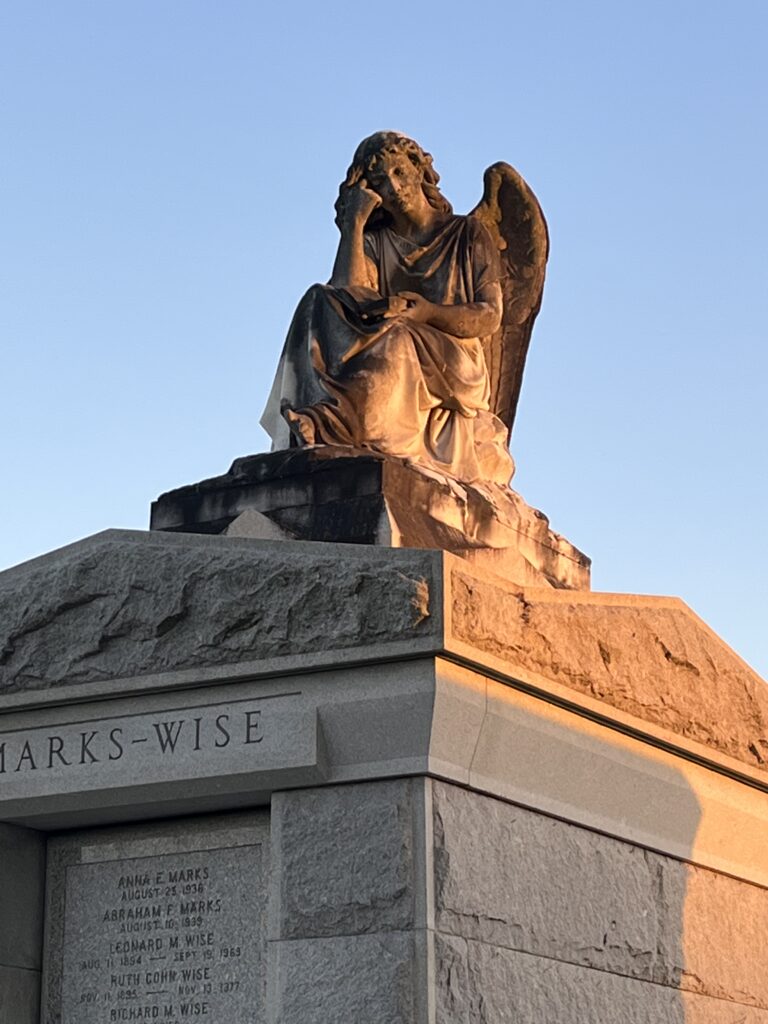
For if he were not expecting that those who had fallen would rise again, it would have been superfluous and foolish to pray for the dead…Therefore he made atonement for the dead, that they might be delivered from their sin.—2 Macc 12:44-45.
Eternal rest grant unto them O Lord, and may perpetual light shine upon them. May their souls and the souls of all the faithful departed rest in peace.