Happy Easter, Christ is Risen! Christ is Truly Risen! Χριστὸς ἀνέστη! Ἀληθῶς ἀνέστη!
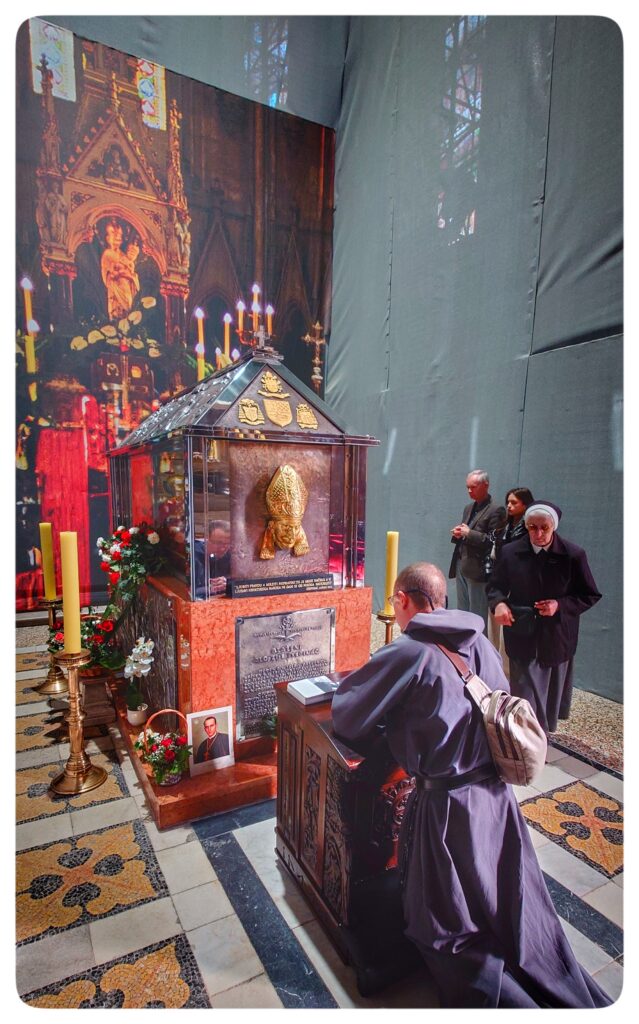
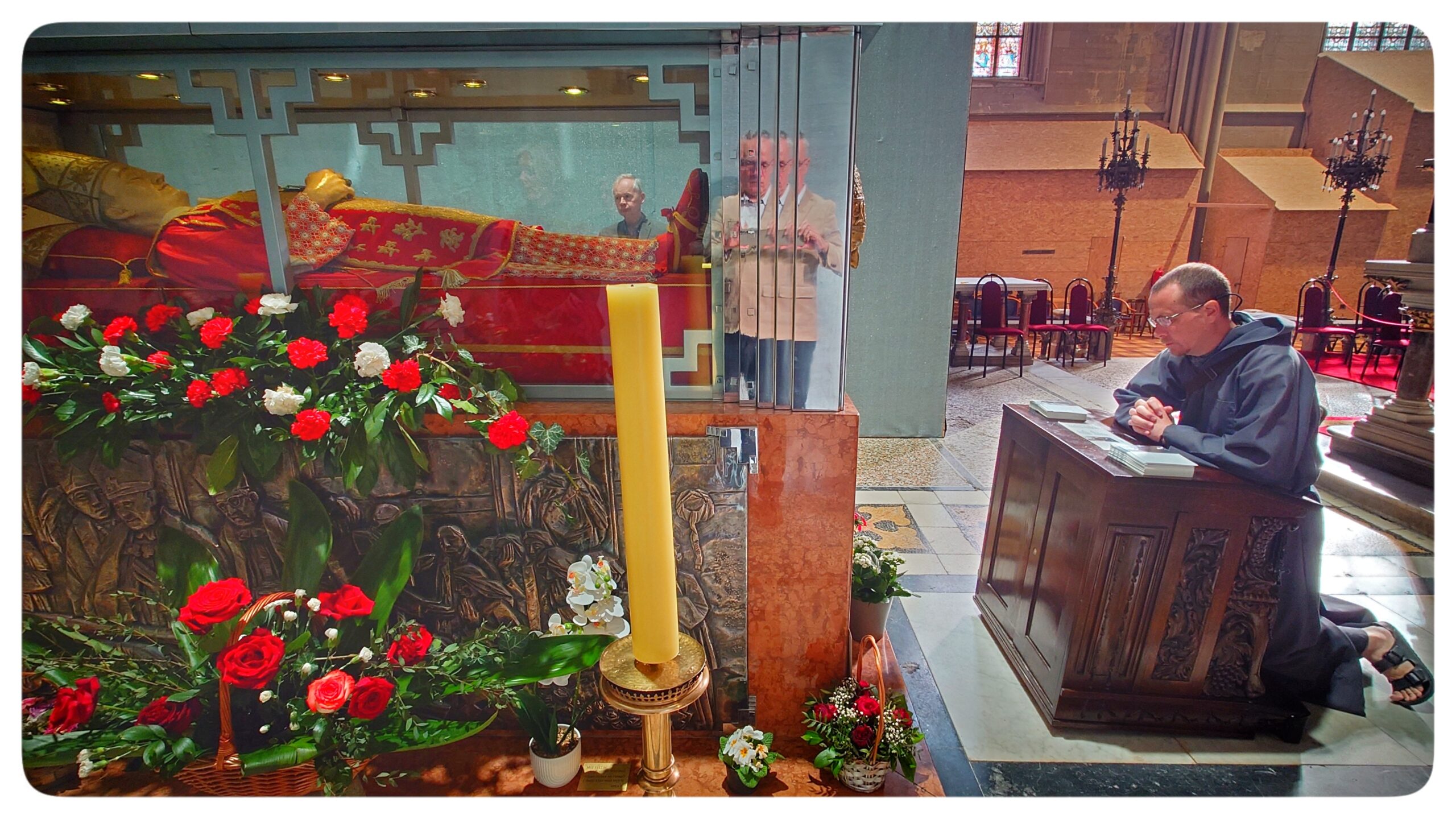
The above picture is me praying in Croatia this spring of 2026 at the tomb of Blessed Aloysius Cardinal Stepinac. He was the Archbishop of Zagreb starting in 1937. The Cardinal was poisoned by the Communists in the 1950s. He died a slow death from that and died in 1960. He was declared a martyr for the faith.
Switch topics for a minute. The old school Jesuits and Franciscans who were missionaries in the New World sent records back to the Old World of conversions and baptisms. This wasn’t so much to brag as to stay accountable to their superiors and benefactors.
So also, because the hermit-thing in my life is not a total farce (I do try to pray or read about 5 hours a day) I wrote an article last year titled My Daily Prayer Targets (From A Through H) to show what I pray for all day. In that article, I explained: “In the Roman Canon of the Traditional Latin Mass, as well as my Rosaries, I found find myself repeatedly praying for the same major things across the globe and locally…”
-A—Abortion and Trafficking (the end of)
-B—Benefactors
-C—Complete Restoration of the Catholic Church
-D—Drugs and Dependence, the reduction of (across the globe)
-E—Enemies (personal enemies, that is.)
-F—Family and Friends, mine
-G—Godchildren
-H—Heathens (of a different country every day.)
Let me tell you a little bit more about my day so you understand my life: In 2016, I switched from the Novus Ordo Missæ (NOM) to the Traditional Latin Mass (TLM) as well as the other six traditional Roman sacraments. Then, in 2020, I switched from the Vatican II “Liturgy of the Hours” (often labeled-in-jest by traditionalists to be “the Liturgy of the Minutes” because it’s so short) to the traditional Divine Office using the 1960 rubrics. Then, in 2025 I even switched those books (Missals and Roman Breviaries) from the 1960 version to the 1939 version.
This is known as the pre-55 calendar and the pre-55 rubrics for both the Roman Missal and the Roman Breviary. The Roman Breviary is the Psalms we are to pray eight times a day. We pray all 150 Psalms in Latin every week. Besides purchasing my new (er, I mean old) Missals and Breviaries, I have to admit that moving from the ‘60 rubrics to the ‘39 rubrics has been a major labor-of-love that has taken much more time than I ever expected. (Much thanks to Fr. Martin Navarro who endures my daily texts asking him questions on the old school rules.)
These are my prayer intentions for it:
- Matins
- First Nocturn: End of Abortion.
- Second Nocturn: End of child sex slavery.
- Third Nocturn: Triumph of the Immaculate Heart of Mary.
- Lauds: A different country’s conversion (See “H” above.)
- Prime: My penitents.
- Terce: My family.
- Sext: Faithful departed.
- None: Friends’ intentions.
- Vespers: Donors’ intentions.
- Compline: Me.
At first, I was annoyed at rad-trads bugging me about Roman Missals made in 1960 versus 1940. What’s the difference? Didn’t both the 1960 version and the 1940 version promote the Traditional Latin Mass? Isn’t attempting to get older books than the next guy just the trads’ version of antiquarianism?
No. Now I understand the importance of obtaining the pre-55 sacramental books. Here’s why:
If the goal were simply to find the oldest Missals and Breviaries possible, I would obviously look for books from the first millennium of Catholicism. Rather, I simply want liturgical books that have no influence from that proven-freemason Archbishop Bugnini (1912-1982.) That is why I purchase books published before 1955. It is not an arrogant attempt to be more-trad than the next guy. (Again, if this were the goal, I’d look for liturgical books from the 9th century.)
Besides a Byzantine Catholic service, I went to a combination of pre-55 and post-55 liturgies for the Holy Triduum this year. So, I’m not obviously saying there’s a sin in an avoiding the preferences I outline in this article.
In any case, the old Roman Breviary has eight “canonical hours” a day. Of course, none of these “hours” endure a full hour (except occasionally Matins.) The Big Hours are Matins, Lauds and Vespers. The Small Hours are called Prime, Terce, Sext, None and Compline. Each canonical hour has a name based on the time of day in which it is ideally said.
Above is how I pray the canonical hours every day. How about the rest of my prayer besides the Divine Office? Again, see Mass intentions above which include “A to H” seen at the beginning of the article. Rosary intentions are often specific requests.
As my donate page says, all donors and non-donors’ intentions get put into my mental prayer-hopper. Most of these requests also become major Mass intentions. Because I don’t take Mass stipends (money for Mass) theres’s always numerous intentions named in every Roman Canon. This includes everyone from generous donors to the homeless I may meet on the street. Then, the memento for the dead also includes the reposed names of many donors, friends, families, readers and those who I have heard about.
Eternal rest grant unto them O Lord, and may perpetual light shine upon them. May their souls and the souls of all the faithful departed rest in peace.