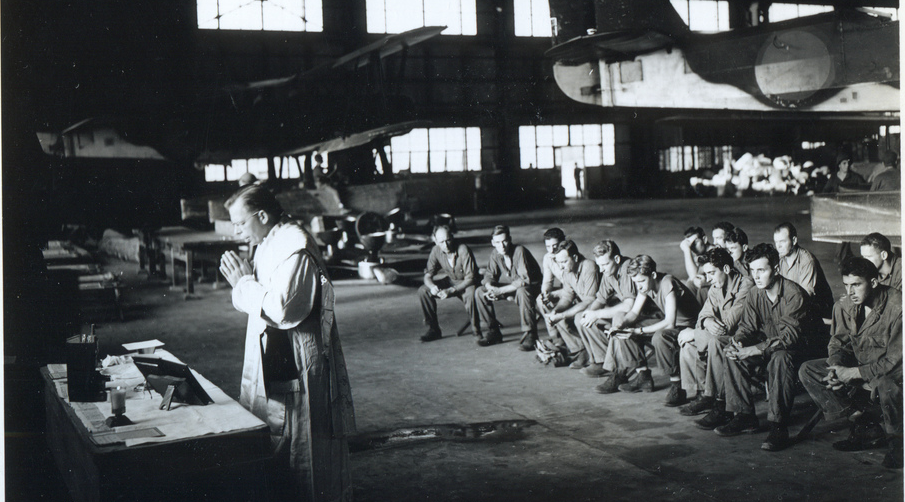
One of the strange things about suburban Catholic Mega-Parishes is that there’s always a tremendous amount of red-tape in getting children or adults baptized. Yet strangely, receiving Holy Communion at such parishes is easier than getting a cheeseburger at McDonalds. This modernist practice is the total inverse of our original Apostolic practice that brought a lot more souls into the Catholic Church.
This isn’t an exaggeration. Keep in mind you need $1.79 to get a cheeseburger at McDonalds. But at your local Mega-Parish any person (even non-Catholics) can obviously walk up to any made-up “Extraordinary Minister of Holy Communion” (EMHC) and receive the Son of God. There is no oversight. You don’t even need $1.79.
Of course, I am not in favor of giving money to get Christ in the Eucharist handed over (for that would heavily resemble what Judas did) but most Catholics do not realize there really was always priestly oversight on who was worthy to receive Holy Communion.
Yes, I know the liberal knee-jerk reactions to this article already at this point: “None of us are truly worthy of Jesus, so He comes to us all in the Eucharist! “The Eucharist isn’t a prize for the perfect.” Even conservative modernists would respond to my article up to this point like this: “The new code of canon law says Communion can’t be denied to anyone except those who have already been warned under Canon 915.” or maybe: “Reception of Communion is a personal matter of being in sanctifying grace between the lay person and Jesus, not the priest!”
But those are all new responses over the past 60 years. The fact is that for nearly 2,000 years, your local priest really did have a say in who was worthy to receive Holy Communion despite modern protests on the privatization of sacraments. (If you don’t like the word “worthy” when it comes to our approach to Christ, do a word-search for “worthy” in the New Testament and you will see there really are people considered less unworthy than others. It’s not a matter of pride or self-righteousness, but a matter of who lives in sanctifying grace.)
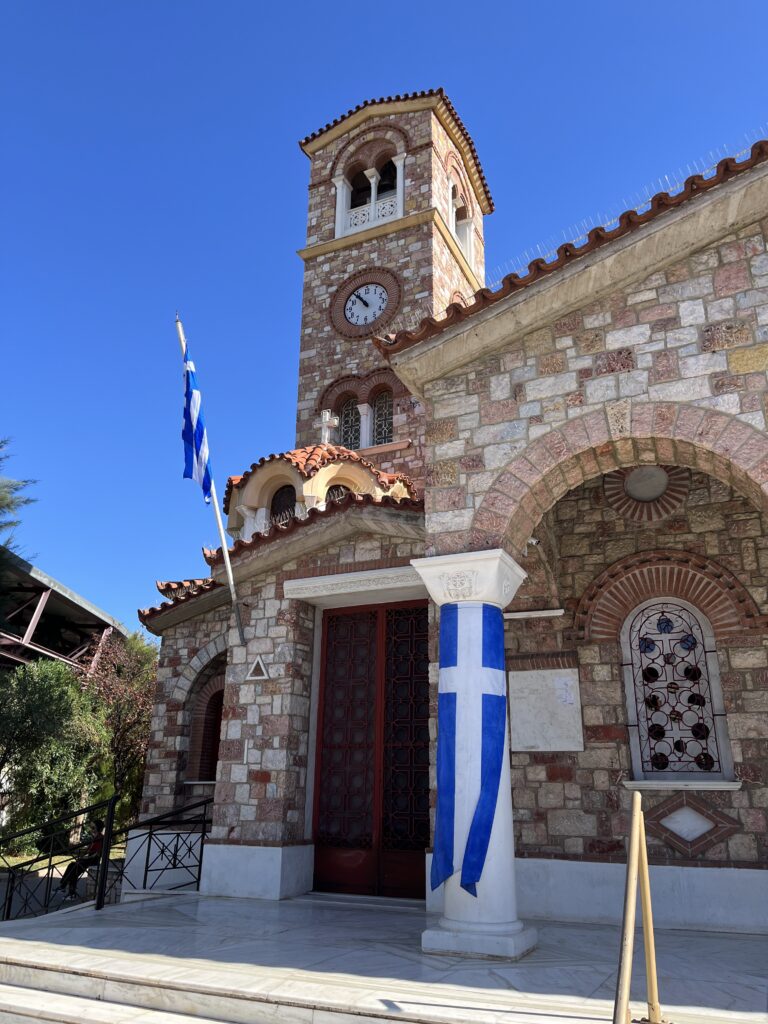
You still see vestiges of the ancient Roman Catholic practice on public worthiness of Holy Communion in Eastern Orthodoxy today. Many Eastern Orthodox parishes require a paper-slip from the priest saying you went to confession during the Great Fast (Lent) before you are allowed to receive Holy Communion at Paschaltide.
In fact, traveling Eastern Orthodox lay folks will often request the parish priest where they are visiting to contact their home pastor to make sure they are ready to receive the Holy Mysteries. By “ready,” I mean at the very least that they are Eastern Orthodox and not in irregular marriages or seen as public heretics by the Metropolitan.
There’s several advantages to the ancient practice of priestly oversight on reception of Holy Communion that redound to the salvation of souls and the glory of Jesus Christ:
1) Less sacrilege of the Eucharist. I have told the story in podcasts about one “conservative” diocese in which I served. There, I asked a bishop, a Cathedral rector (and seminary professor) and a pastor (parish priest) exactly how many Catholics they believe receive Holy Communion in a state of mortal sin every Sunday. Without any corroboration between the three of them, all three answered 80% without much concern. And this was in an allegedly-conservative diocese!
When one considers that St. Vincent Ferrer says that receiving Holy Communion in a state of mortal sin is as wicked as flushing the Eucharist down the toilet, this means that in that “conservative diocese” the Eucharist is essentially flushed down the toilet by 80% of the people receiving Holy Communion. Assuming the Novus Ordo Mass (NOM) is valid, this means more people are going to hell through this practice than if it were actually invalid!
But more importantly than even the salvation of souls, keep in mind that 80% of people sacrileging the Eucharist is an unspeakably grievous sin against Christ in the Blessed Sacrament. Would all this be stopped if we Roman Catholic priests had some say in who was ready to receive Holy Communion as they did in the past?
No. But a lot of it would be stopped.
2) A Reminder that Reception of Holy Communion is a Public Act. Whereas confession is a private act, the reception of Holy Communion is a public act. This too is confusing to the modernist mindset, as the modernist is so affected by the Protestant claim that everything comes down to “a personal relationship with Jesus.” But such Catholics are ignorant of the fact that even the new Code of Canon Law admits that reception of Holy Communion is a public statement.
How is it a public statement? Receiving Holy Communion is not only a public act stating that you are (to the best of your guess) in a state of sanctifying grace, but also a statement that you are in no irregular unions (such as “a second marriage” or co-habitation.) Because Communion means “union-with” it also means you’re not a heretic. That is, you are not just in union with your local bishop, but in union with the ancient Apostolic Faith itself. At least, that’s what it used to mean.
Thus, priests must protect the Eucharist from certain individuals, as unpopular as that notion is with the modernists.
But the sense of the sacred has been lost, because…
1) If unconsecrated hands can touch the Holy Eucharist (as the current hierarchy insists) then most people come to the conclusion that there is really nothing that special about the Eucharist. This is seen in the indiscriminate approach of lay people to the altar at the NOM. When I was an NOM priest, I was seen as the mean guy not only for warning Catholics about receiving the Eucharist in a state of mortal sin, but even admonishing non-Catholics they couldn’t receive Holy Communion.
To tell the truth, I was originally mad at such non-Catholics for being mad at me about telling them they couldn’t receive Communion at my Novus Ordo Masses shortly after ordination. But then I realized they had good reason to be mad at me: I was the only one saying this. For example, as TIA reported: “Brother Roger Schutz, a minister of the Swiss Reformed Church and founder of the Taizé community, receives Communion from Cardinal Joseph Ratzinger at Pope John Paul II’s funeral in St. Peter’s Square at the Vatican.”
Thus, my parishioners would literally ask: “Why do you think you’re more Catholic than the Pope”? Indeed, I stood alone in sticking with Apostolic practice when I looked around at the beginning of my priesthood. (And notice we’re not talking advanced theology, but rather simply refraining from giving Holy Communion to Protestants as seen in the above link.)
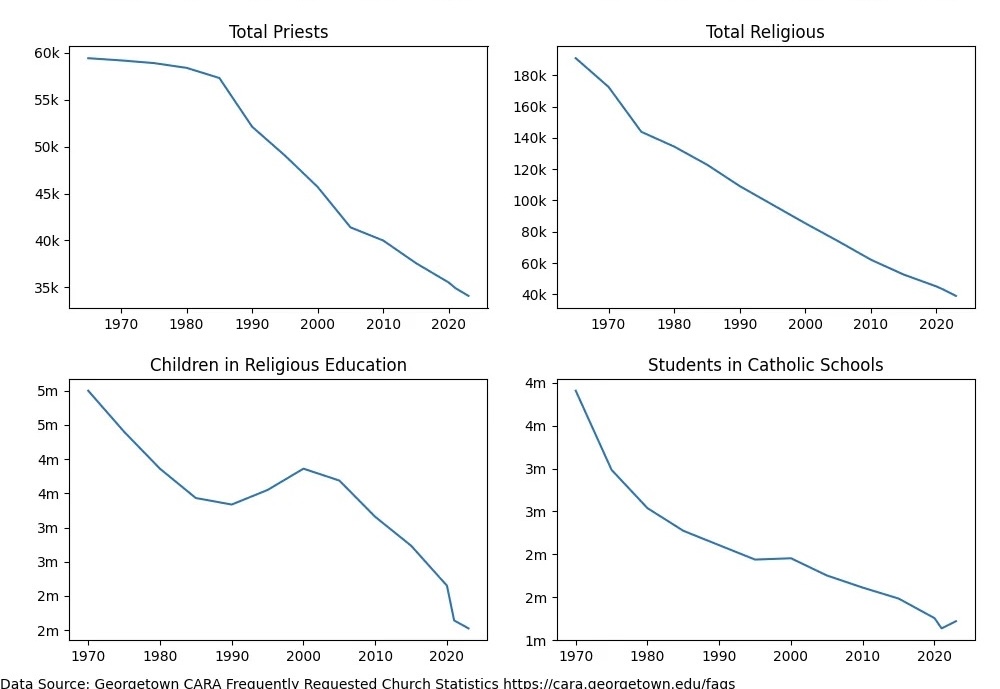
2) Reduction in priesthood numbers. As seen above, priestly vocations have tanked since the 1960s.
This has necessitated the creation of the suburban Catholic Mega-Parish where the layman to priest ratio is in the thousands. For example, the parish in which my own biological father worked at for a decade, St. Thomas More, has several priests serving 14,000 registered families. Not 14,000 individuals but 14,000 families. Obviously, at such a parish, a priest can’t identify a non-Catholic receiving Holy Communion.
Of course, at this point, someone might say to me: “Stop judging, Jesus loves them all, Catholic and non-Catholic.”
But St. Paul taught very differently on worthy reception: Therefore whosoever shall eat this bread, or drink the chalice of the Lord unworthily, shall be guilty of the body and of the blood of the Lord. But let a man prove himself, and so let him eat of that bread, and drink of the chalice. For he that eateth and drinketh unworthily, eateth and drinketh judgment to himself, not discerning the body of the Lord.—1 Cor 11:27-29.
Other translations read “condemnation” in place of “judgment.” Yes, you eat your own condemnation when you receive Holy Communion in a state of mortal sin.
The modernist sloppy approach to the sacraments obviously reduces the inspiration of faithful, celibate men wanting to put their life on the line for Christ in the Eucharist. Why? Because such men know they will answer to God for sacrileging the Eucharist thousands of times over every weekend. (Again, see the 80% story on receiving in mortal sin even according to modernists several paragraphs up if you doubt this.)
Also, as seen in number one above, if lay people can touch the Eucharist with unconsecrated hands, many good men might ask the very reasonable question: Why then have my hands been consecrated at ordination if everyone (even non-Catholics) can touch the Eucharist? Yet this is the de facto practice in every diocese, even if new Canon Law stands against it de jure.
The history of the Catholic Church shows that priests will be held accountable before God for not only non-Catholics receiving Holy Communion in their parishes, but also for Catholics in mortal sin receiving Holy Communion in their parishes. This is due to the fact that reception of the Eucharist in sin is (according to the Council of Trent) the worst sin one can commit. It’s also due to the fact that receiving the Eucharist in sin reduces the external glory of the Blessed Trinity (even as the internal glory can never be reduced.)
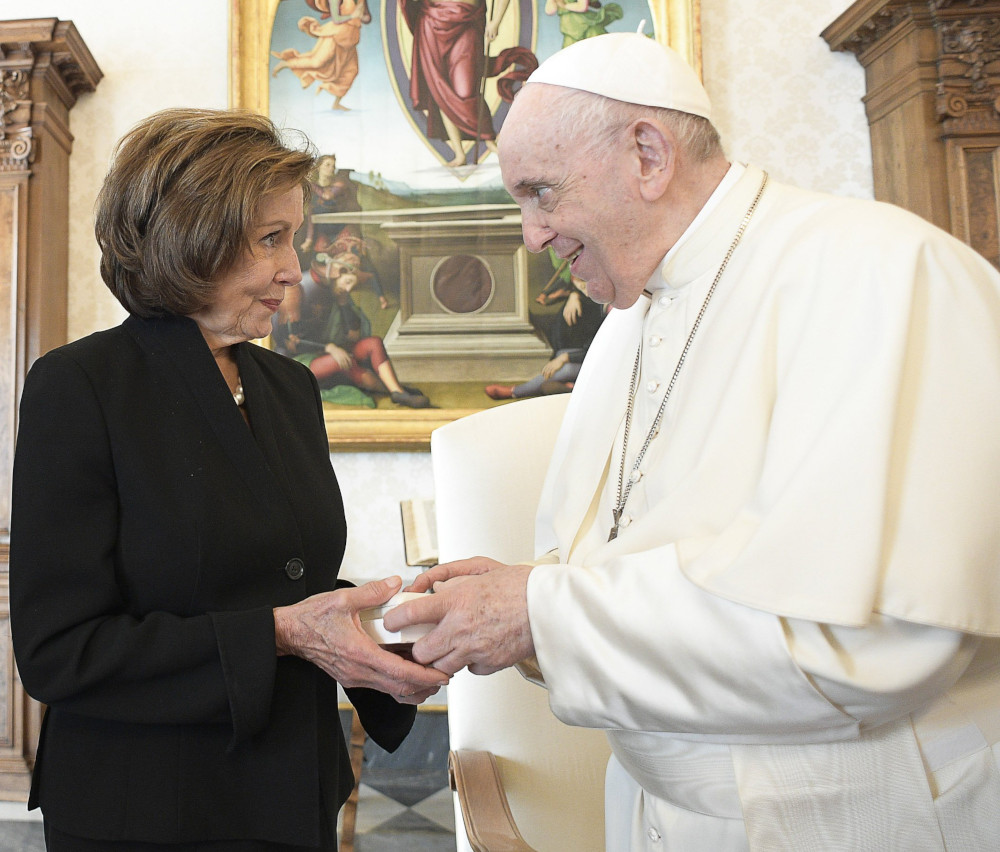
U.S. House Speaker Nancy Pelosi during a private audience at the Vatican on 9 Oct 2021. (CNS photo/Vatican Media)
Even Cardinal Burke wrote about Canon 915: “The reception of Holy Communion by those who publicly and obstinately violate the moral law in its most fundamental precepts is a particularly grave form of sacrilege.”
Of course, this would include pro-abortion politicians like Joe Biden and Nancy Pelosi (seen above.) And yet, the current apostates in Rome wheeled-in both pro-aborts to the Vatican to make a show of them receiving Holy Communion, even after some American prelates had timidly warned them about the danger of sacrilegious communions following the death of so many unborn children from their laws. Of course, American secular media reveled in the arrival of Pelosi and Biden to receive Holy Communion in the Vatican precisely because of their pro-abortion stance.
Click on the two links in the above paragraph, and you might be outraged at the above examples. But most American parish priests aren’t shocked at the above stories because they already allow nearly everyone (including non-Catholics) to go to Holy Communion. This is true, even if 1% of their fellow NOM priests will give the occasional announcement against an indiscriminate approach to the altar.
Ironically, when a person wants to convert to the Catholic faith and be baptized (and so save his soul) he has to go through a ridiculous gauntlet of hurdles both canonical and paper-work wise. Considering that baptism is necessary for salvation and reception of Holy Communion in sin is the worst sin possible, the current practice in every diocese of the USA is extremely detrimental to salvation.
Why then is it so hard to receive baptism and so easy to receive Holy Communion today? As we will see in my next article, the Catholic Church’s practice of this over 19 centuries was the exact opposite. I will title it: Make It Easy to Enter the Faith.